




Calorie Deficit For Women: A Practical Guide
Introduction
A lot of calorie deficit advice online is written as if everybody works the same way. It doesn't. Women's hormonal patterns, muscle-to-fat ratios, and typical calorie needs differ from men's in ways that actually matter when planning a deficit, not just in theory, but in how consistent, sustainable, and safe that deficit ends up being.
This guide focuses specifically on what a calorie deficit should look like for women, where the common advice goes wrong, and how to lose fat without wrecking energy, hormones, or long-term progress in the process.
A quick but important note: the ranges below are general guidelines, not a substitute for professional advice. If you have a history of disordered eating, a hormonal condition, or any concern about how a deficit might affect your health, a doctor or registered dietitian can help set a target that's actually right for you.
Why "Just Eat Less" Advice Fails Women More Often
Generic diet advice tends to recommend flat calorie targets, 1200 calories, 1500 calories, regardless of who's asking. For many women, especially those who are more active or have more muscle mass, these numbers sit well below what their body actually needs, even in a deficit.
The result is a familiar pattern:
- Constant hunger that eventually leads to overeating or bingeing
- Persistent fatigue that makes workouts feel harder than they should
- Irregular or missed menstrual cycles from prolonged, excessive under-eating
- Weight loss that stalls despite very low intake, as the body adapts to conserve energy
None of this means women can't lose fat effectively. It means the deficit has to be sized around the individual, not a generic number pulled from an outdated diet chart.
Finding a Safe Starting Point
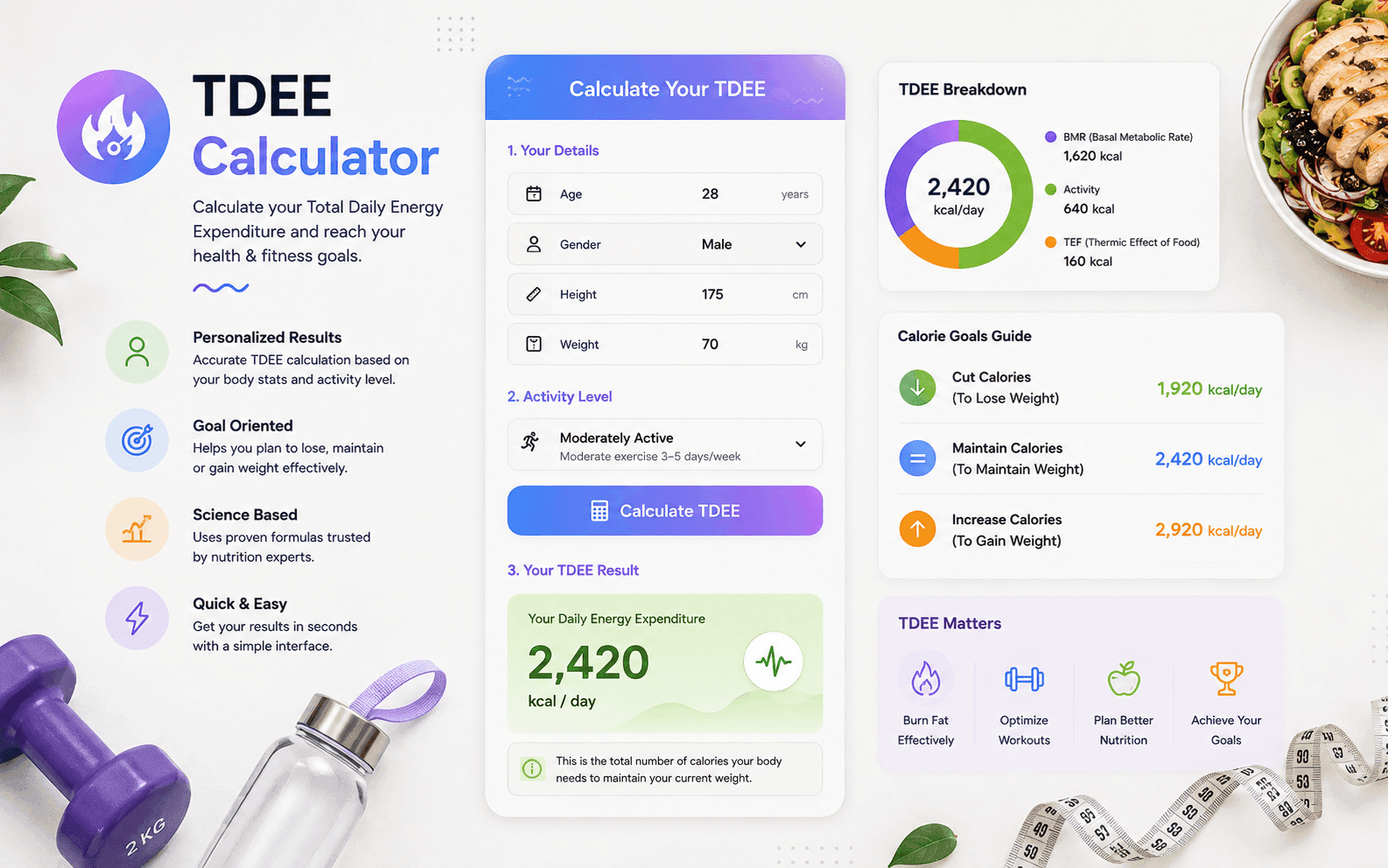
Before subtracting anything, you need an accurate maintenance number, the calories your body burns to stay exactly where it is. From there, a moderate deficit is generally safer and more sustainable than an aggressive one.
A general safe range for most women is a deficit of 15 to 20 percent below maintenance.
For context, this typically works out to roughly 300 to 500 calories below maintenance for most women, though the exact number depends heavily on activity level, current weight, and lifestyle. Going meaningfully below this range for extended periods raises the risk of the issues mentioned above, especially when sustained for many weeks without breaks.
A calorie deficit calculator that factors in your age, weight, height, and activity level gives a far more useful starting point than any flat number circulating online.
The Menstrual Cycle and Calorie Needs
One factor almost entirely missing from generic deficit advice: the menstrual cycle itself affects energy needs and hunger levels throughout the month.
- Follicular phase (roughly the two weeks after your period starts): energy and hunger are typically more stable, often making this a more comfortable window for sticking to a deficit
- Luteal phase (the two weeks before your period): hunger and calorie needs tend to rise slightly for many women, sometimes by 100 to 300 calories a day
Rather than fighting this pattern, working with it tends to produce better long-term consistency. Expecting slightly increased hunger in the luteal phase, and not treating it as a failure of willpower, helps prevent the frustration that often derails a deficit around this time of the month.
Why Strength Training Changes the Whole Equation
A calorie deficit without resistance training often leads to losing weight from muscle as well as fat, leaving a softer body composition despite a lower number on the scale.
Strength training during a deficit helps by:
- Signaling to the body to preserve muscle tissue even while calories are reduced
- Supporting a higher resting metabolic rate over time, since muscle burns more energy than fat
- Improving body composition and shape, not just total weight lost
- Counteracting the common myth that women should focus mainly on cardio for fat loss
Cardio has its place for cardiovascular health and additional calorie burn, but strength training is what protects the muscle that a deficit would otherwise chip away at.
Protein Needs Often Get Underestimated
Protein recommendations are frequently written with a male frame of reference in mind, leading many women to under-eat protein without realizing it.
A reasonable target during a deficit is around 1.6 to 2 grams of protein per kilogram of body weight. For a woman weighing 65 kg, that's roughly 104 to 130 grams a day, spread across meals rather than concentrated in one sitting.
Adequate protein during a deficit helps with:
- Preserving muscle while losing fat
- Managing hunger more effectively than lower-protein meals of the same calorie count
- Supporting recovery from strength training sessions
Signs the Deficit Needs Adjusting
A deficit that starts out working well doesn't necessarily stay that way. Watch for signs that intake needs to be reassessed rather than pushed through:
- Menstrual cycle becomes irregular or stops entirely
- Persistent fatigue that doesn't improve with rest
- Hair thinning, mood changes, or difficulty concentrating
- Weight loss stalling for several weeks despite consistent tracking
- Strength or performance noticeably declining in workouts
Any of these are a signal to eat more, not push harder, and in the case of cycle changes or unusual symptoms, a conversation with a doctor is worth having before continuing the deficit.
Conclusion
A calorie deficit for women works best when it accounts for the whole picture, an accurate maintenance number, a moderate rather than extreme cut, enough protein, strength training to protect muscle, and awareness of how the menstrual cycle shifts hunger and energy throughout the month. Fat loss doesn't require eating as little as possible. It requires eating the right amount consistently, adjusted to how your body actually responds.
Start with an accurate baseline using the calorie deficit calculator, and build the rest of the plan around your body, not a generic number.