




Calorie Tracking with Food Delivery in Netanya: A Practical Guide
Introduction
Between work, commuting, and getting kids fed and to bed on time, cooking a full meal every single night isn't always realistic, and in a city like Netanya, with its mix of young families and professionals commuting to Tel Aviv or working locally, food delivery has become less of a treat and more of a weekday tool. The problem is that relying on delivery regularly makes calorie tracking feel harder than it actually needs to be.
This guide isn't about cooking more. It's about ordering the same way you already do, while keeping your calorie log accurate enough to actually mean something.
Why delivery-heavy weeks throw off tracking
A home-cooked meal comes with known ingredients. A delivered one usually doesn't. That gap creates a specific problem for anyone trying to stay on top of a calorie or weight-loss goal:
- Prepared meals are always an estimate, since you don't know exactly how much oil or sauce went into the dish
- Portion sizes vary by restaurant, so the same dish name can mean very different calorie counts depending on where it came from
- Repeated orders create false confidence, when a slightly different recipe or portion goes unnoticed because "it's the same thing I always order"
None of this means delivery has to be abandoned. It means the approach to logging needs to change.
Split every order into two parts
Every delivery order is really two different things at once, and treating them the same way is where most of the inaccuracy creeps in.
Prepared meals (the actual dish from the restaurant) will always require some estimation, since there's no way to know the exact oil, sauce, or portion size used.
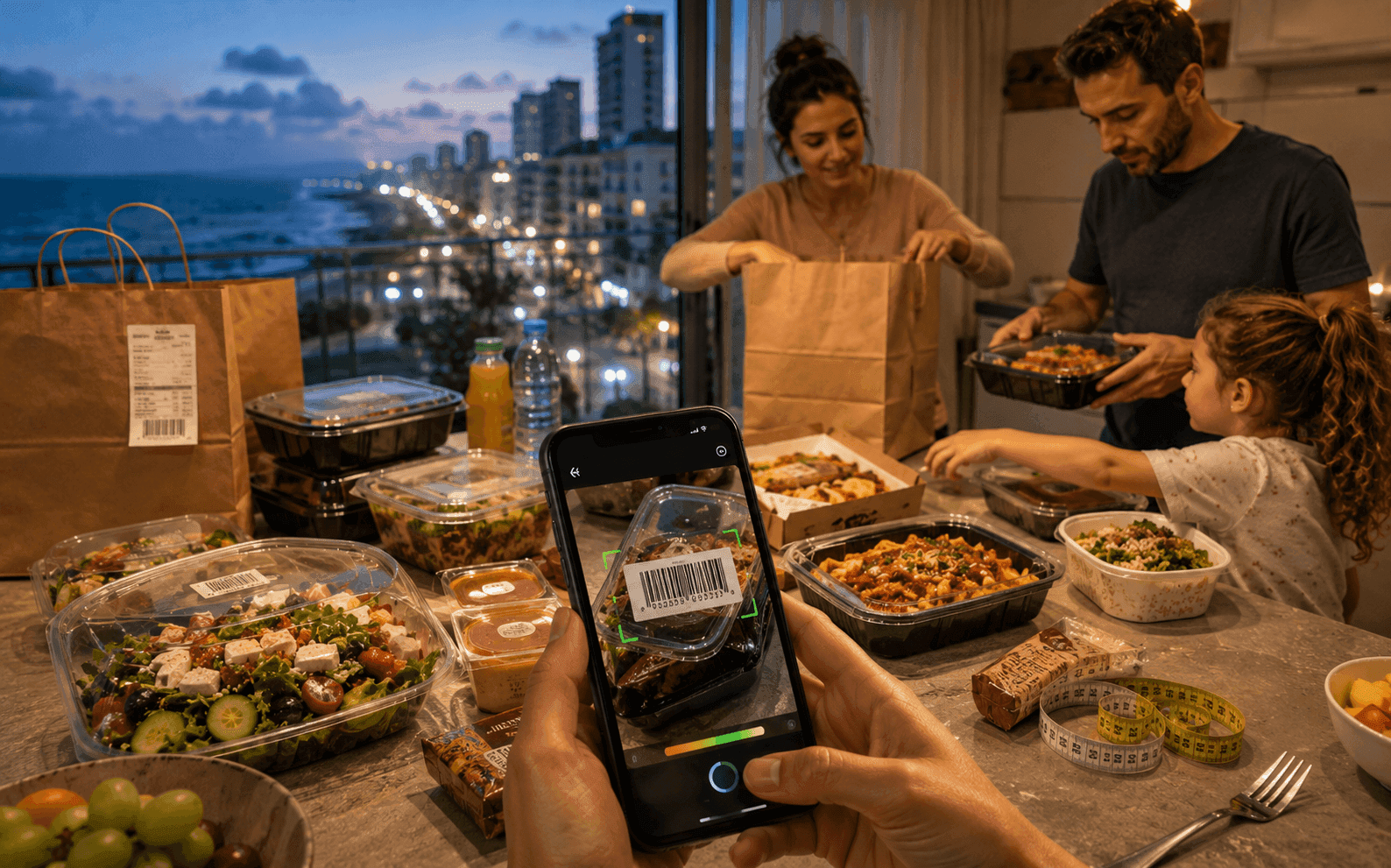
Packaged items that come along with the order, drinks, snacks, yogurts, anything with a barcode, can be logged with complete accuracy, since the nutrition data comes straight from the manufacturer.
Most people log the entire order as one vague guess. In reality, a meaningful chunk of it can be logged with total precision if it's separated out first.
A typical family delivery order, broken down
The order: two kids' meals with pasta, one adult salad, and a shared box of packaged snacks.
- The adult salad gets a reasonable estimate, based on portion size and how much dressing appears to be included
- The packaged snacks get scanned by barcode before anyone opens the box, giving an exact calorie count per item regardless of how many are actually eaten
- The kids' meals typically don't need to go in your own log at all, unless you actually taste some of it, in which case only the amount tasted gets added
This kind of split turns a chaotic family order into something where your own portion is tracked accurately, independent of what everyone else at the table is eating.
Building a habit that survives a busy week
The goal isn't a complicated new process, it's a small adjustment to an existing one:
- Order as usual, through whichever app or restaurant you already use
- When the order arrives, separate packaged items from prepared dishes before anything gets opened
- Scan the barcode on anything packaged, drinks, snacks, sauces sold in individual containers
- Log the prepared meal with a reasonable estimate based on portion size and visible ingredients
After a week or two, this becomes automatic, and it stops feeling like extra work layered on top of an already busy evening.
Making it easier without giving up delivery altogether
For weeks that are especially packed, delivery doesn't have to mean tracking becomes a total guess. An AI meal planner can build a weekly menu around your calorie and macro targets in advance, so on nights you do cook or reheat something, it already fits your goals without extra calculation, leaving delivery nights as the exception rather than something that derails the whole week.
Conclusion
Relying on food delivery a few nights a week doesn't have to mean losing track of your calorie goals. Splitting every order into what can be measured exactly, packaged items, and what needs a reasonable estimate, prepared dishes, keeps your tracking meaningfully accurate without asking you to cook more than your schedule actually allows.