




Calorie Tracking in Tel Aviv for Olim and Expats: A Practical Guide
Introduction
Tourists visiting Tel Aviv for a week can afford to eat whatever looks interesting and worry about it later. Olim and expats settling in for the long term don't have that luxury, this is now daily life, and figuring out how to track it accurately is part of actually living here, not just visiting.
The challenge isn't motivation. It's that most of the tools and habits that worked back home, reading English nutrition labels, recognizing familiar packaged brands, knowing restaurant portion sizes by instinct, suddenly don't apply. This guide is built for residents working through that adjustment, not for someone passing through for a few days.
The Hebrew Label Problem
Almost every packaged product in an Israeli supermarket carries a nutrition table, but it's printed in Hebrew, and often in a font size that makes quick decisions difficult even for someone with basic reading skills.
- Ingredient lists in Hebrew slow down even simple decisions, like checking whether a product contains added sugar
- Serving sizes are often listed in grams, which requires a mental conversion for anyone used to cups or ounces
- Brand names familiar from home rarely appear here, so there's no shortcut of recognizing a product on sight
This is exactly where a barcode or photo-based scan becomes more useful than trying to read and translate a label in the supermarket aisle.
Adjusting to a Different Baseline of "Normal" Portions
Portion sizes in Israel don't always match what feels standard elsewhere, and both directions can throw off a calorie estimate.
- Restaurant mezze and appetizer spreads often arrive automatically with a main dish, and can add a few hundred calories before the main course even shows up
- Bread served at the start of a meal is frequently unlimited and refilled without being asked, making it easy to eat well past what would normally be considered "one portion"
- Coffee culture portions run smaller than many Western equivalents, which can actually work in your favor if you're used to large sizes elsewhere
None of this is a reason to avoid the local food culture. It just means the mental "portion calculator" that worked in your home country needs to be recalibrated here.
Workplace Catering and Shared Office Snacks
Tel Aviv's tech and startup culture means a lot of daily eating happens inside the office, catered lunches, snack walls, and communal fruit bowls that are easy to graze from without registering it as a real meal.
- Catered lunches rarely come with a nutrition breakdown, and portions are often served buffet-style, which makes it easy to underestimate what actually ended up on the plate
- Snack walls stocked with bars, nuts, and packaged treats invite repeated small grabs throughout the day that add up quietly
- Communal meals with colleagues, especially around holidays, tend to run longer and heavier than a typical lunch, and it's easy to feel obligated to try everything on the table
Treating office food the same way you'd treat a restaurant meal, worth a quick log, rather than something that "doesn't count" because it was free, keeps the daily picture accurate.
Shabbat Dinners as a Weekly Recurring Event
For many olim and expats, Friday night dinner becomes a fixed weekly social anchor, whether hosted by family, friends, or a community group. Unlike an occasional big meal back home, this one repeats every single week.
- A recurring heavy meal needs a recurring plan, not a one-off decision each Friday, since the same choices repeat week after week
- Balancing the rest of the week around it works better than trying to eat lightly on Friday itself, which usually isn't realistic in a hosted setting
- Logging even a rough estimate of the Friday meal, rather than skipping it entirely from tracking, keeps the weekly average honest instead of quietly inflated every week
Why Photo-Based Logging Works Especially Well Here
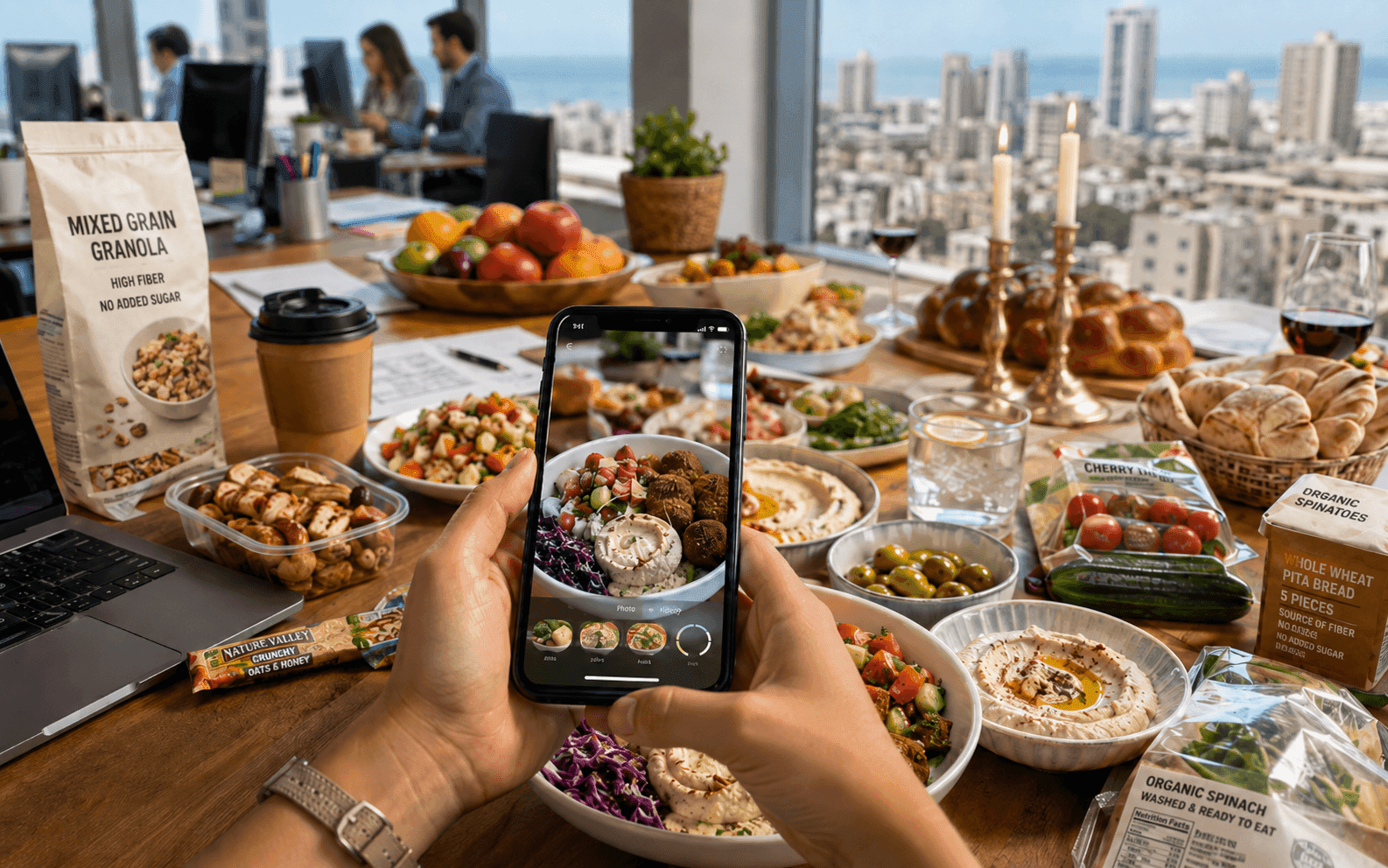
Given how many meals in daily Israeli life don't come with an English label, a fixed menu, or a portion you can look up, photographing the meal and letting the system estimate it directly solves a problem that manual search often can't.
- It works regardless of language, since it identifies the food visually instead of requiring a text search in a foreign-language database
- It handles home-cooked and shared dishes, common at Shabbat tables and among Israeli friends, better than trying to match them to a generic packaged entry
- It adapts over time, improving its estimates for the specific dishes you eat regularly once you start correcting entries
A photo-based calorie counter removes the step of first identifying what a dish is called before you can even attempt to log it, which matters a lot when half the food around you doesn't have an obvious English name.
Conclusion
Tracking calories as a resident of Tel Aviv isn't the same task as tracking them on a week-long visit. Hebrew labels, different portion norms, office catering culture, and a recurring Friday night dinner all need their own approach, not a system built for a home country that doesn't apply here anymore. Photo-based logging closes most of the remaining gap, letting you track what you actually eat instead of what you can find in English.