




Calories in Ashkelon Street Food: Fried Fish, Mafrum, Couscous & Moroccan Salads
Introduction
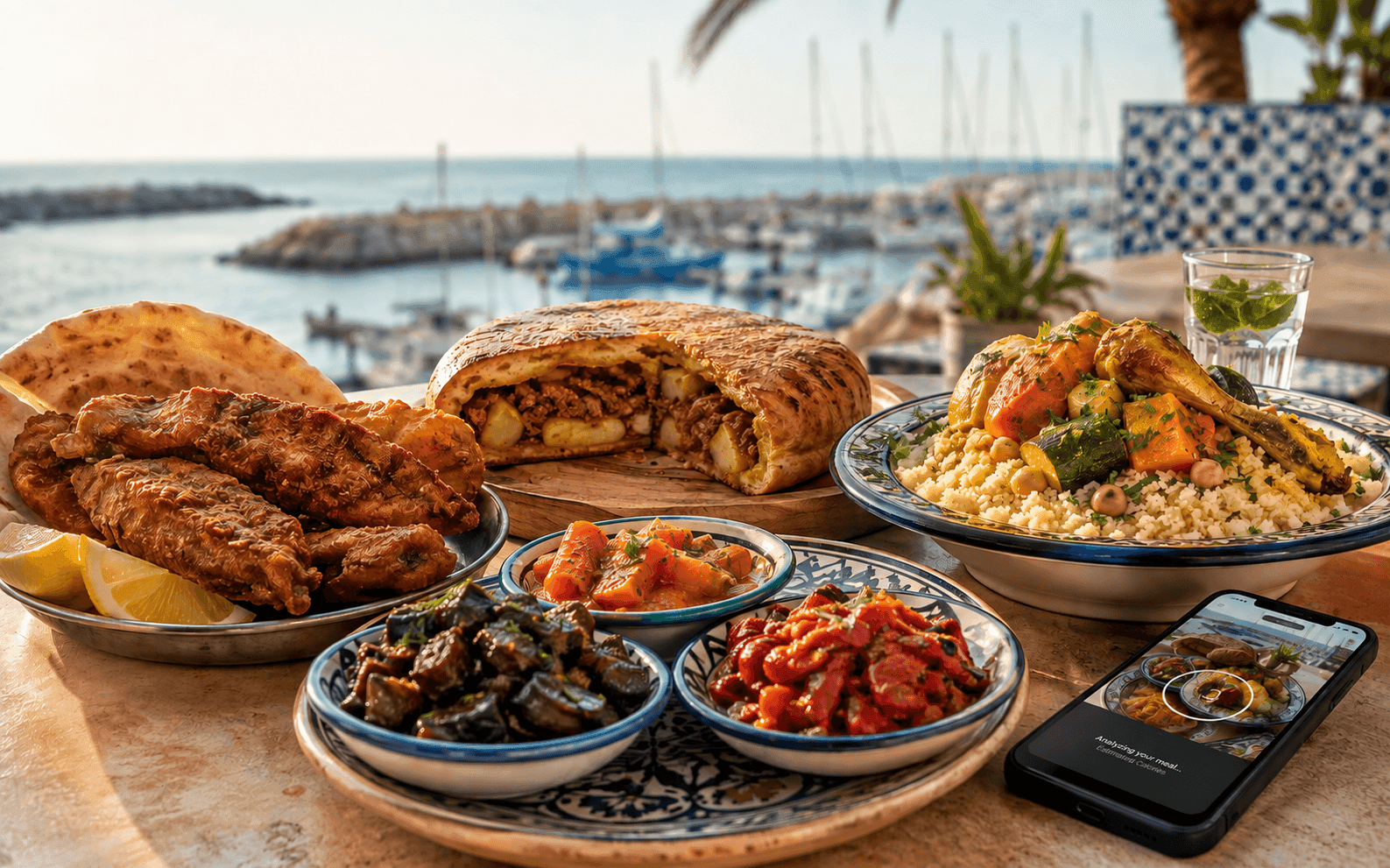
Ashkelon, with its coastline and lively marina, as well as the Moroccan heritage deeply rooted in the city, offers a different kind of street food from what you might find in other cities in central Israel. Fresh fish from the sea, North African-inspired fried pastries, and cooked salads served with almost every meal are all available as quick street food, not just as home-cooked dishes.
This article focuses specifically on these foods—fried fish, mafrum, couscous, and Moroccan salads—with reasonable estimates based on typical ingredients. As always with street food, these figures are ranges rather than precise measurements of a specific vendor's dish.
Fried Fish: How Many Calories Are in a Marina-Style Serving?
Fried fish, usually sold in a pita or as a meal with side dishes, is one of the street foods most associated with Ashkelon's coastal area.
Estimated calories for a fried-fish pita (about 120 g of fish):
- Battered fried fish fillet: approximately 320–400 calories, depending on the thickness of the coating and how much oil it absorbs during frying
- Pita: approximately 250–280 calories
- Tahini, salad, and pickles: approximately 100–150 additional calories
Total for a full pita meal: approximately 670–830 calories. The batter surrounding the fish is the most significant factor, since it absorbs considerably more oil than fish that is baked or grilled without a coating.
Mafrum: How Many Calories Are in One Serving?
Mafrum, a potato stuffed with ground meat and spices and fried in beaten egg, is a classic North African dish that is also served as a quick street-food meal.
Estimated calories for one mafrum (about 150 g):
- Potato: approximately 120–150 calories
- Ground-meat filling: approximately 150–200 calories, depending on the fat content of the meat
- Egg coating and frying: approximately 100–130 additional calories
Total for one mafrum: approximately 370–480 calories. The combination of frying both the potato and the egg coating is what makes a relatively simple dish quite calorie-dense for its size.
Couscous: How Many Calories Are in a Typical Bowl?
Couscous, made from steamed semolina grains, is usually served with cooked root vegetables and sometimes meat or chicken.
Estimated calories for a medium bowl (about 200 g couscous with vegetables):
- Couscous: approximately 260–300 calories
- Cooked root vegetables (carrot, zucchini, pumpkin): approximately 80–120 additional calories
- Meat or chicken (about 100 g): approximately 180–250 additional calories
Total for a full serving with meat: approximately 520–670 calories. Compared with the fried foods above, couscous with vegetables tends to be one of the more balanced street-food options in Ashkelon, particularly when the protein is chicken rather than fatty meat.
Moroccan Salads: How Many Calories Are in a Mixed Serving?
Cooked Moroccan salads, such as eggplant, roasted peppers, spicy carrots, or beetroot, are usually served as side dishes. In larger portions, however, they can add up to a substantial part of a meal.
Estimated calories for a serving of three to four salads (about 250 g total):
- Eggplant in tomato sauce: approximately 90–120 calories
- Spicy carrots with oil: approximately 70–100 calories
- Roasted peppers with olive oil: approximately 80–110 calories
Total for a mixed serving: approximately 240–330 calories. The key factor is the amount of oil used to prepare each salad, which can vary considerably from one vendor to another.
Why These Foods Are Particularly Difficult to Estimate
As with other street foods, general estimates struggle to account for the variation between vendors:
- The thickness of the batter on fried fish directly affects how much oil is absorbed and varies from vendor to vendor.
- The fat content of the ground meat in mafrum is not standardized and can significantly affect the final calorie count.
- The amount of oil in Moroccan salads can vary substantially, resulting in differences of dozens of calories per salad.
That is why even an estimate based on typical recipes remains a range rather than an exact measurement of the specific dish purchased.
How to Get a More Accurate Estimate of the Meal You Ate
The most reliable way to determine how many calories were in your meal is to document the actual dish. An Israeli-food recognition app that analyzes photos can identify foods such as fried fish, mafrum, and couscous and provide an estimate adjusted for the portion size and toppings actually present on your plate, rather than relying on a general range based on another vendor.
Conclusion
Ashkelon's street food reflects both the city's North African heritage and its proximity to the sea. Fried fish and mafrum tend to be relatively calorie-dense for their size because of the frying process, while couscous with chicken and Moroccan salads can offer more balanced alternatives. Documenting the actual meal, rather than relying on a general estimate, remains the most reliable way to understand what you ate.