




Calories in Beersheba Street Food: Malawach, Jachnun, Kubaneh & Yemenite Soup
Introduction
Beersheba was shaped by layers of culture that are also reflected on the plate: a long-established Yemenite community that brought with it a rich and distinctive cuisine, alongside Bedouin influences from the surrounding Negev. The result is street food that differs from what you might find in Tel Aviv or Jerusalem and can sometimes be more difficult to estimate in terms of calories because it is less familiar to standard calorie-counting tools.
This article focuses specifically on these foods—malawach, jachnun, kubaneh, and Yemenite soup—with reasonable estimates based on typical ingredients and preparation methods. As always, the ranges can vary depending on the specific recipe and the amount of oil used.
Malawach: How Many Calories Are in One?
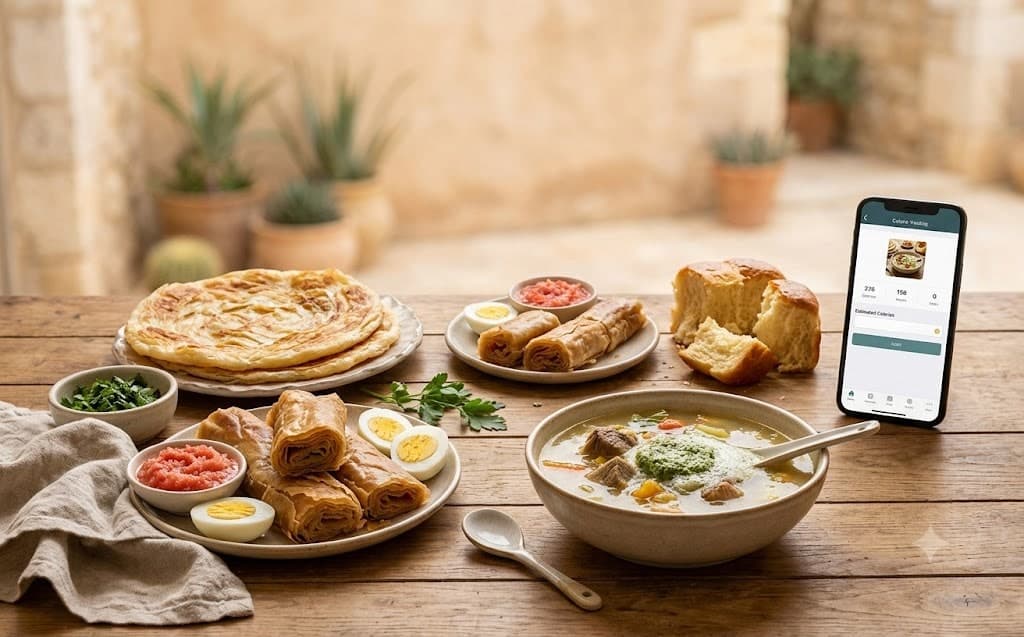
Malawach is a flaky pastry fried in a pan with oil and is typically served with grated tomato, a hard-boiled egg, or butter.
Estimated calories for one malawach (approximately 150–180 grams):
- Malawach itself: approximately 420–500 calories, mainly due to the oil absorbed by the flaky pastry during frying
- Grated tomato and schug: approximately 30–50 additional calories
- One hard-boiled egg: approximately 70 additional calories
- Melted butter: approximately 100 additional calories
Total for a serving with all the typical additions: approximately 550–650 calories. The amount of oil absorbed by the pastry during cooking is the main factor affecting the calorie count, rather than the toppings themselves.
Jachnun: How Many Calories Are in a Typical Serving?
Jachnun is baked slowly for many hours and contains numerous layers of dough and fat that accumulate during the long cooking process.
Estimated calories for an average serving (approximately 150 grams):
- Jachnun itself: approximately 450–550 calories, depending on the amount of oil or fat used in the specific recipe
- Tomato paste and a hard-boiled egg, as traditionally served: approximately 100–130 additional calories
Total for a traditional serving: approximately 550–680 calories. Jachnun tends to be particularly calorie-dense compared with other pastries because of its rich, layered dough and long cooking process.
Kubaneh: How Many Calories Are in One Slice?
Kubaneh, like jachnun, is a traditional Yemenite pastry, but it is generally less rich than jachnun and has a lighter, more airy texture.
Estimated calories for a medium slice (approximately 100 grams):
- Plain kubaneh: approximately 280–340 calories
- Kubaneh served with a hard-boiled egg: approximately 350–410 calories
The difference between kubaneh and jachnun is noticeable in both flavor and texture, but it can also be reflected in the calorie count, with kubaneh generally considered the lighter option of the two.
Yemenite Soup: How Many Calories Are in a Bowl?
Yemenite soup is typically based on meat or chicken with root vegetables and distinctive hilbeh seasoning, and it is often served as a complete meal on its own.
Estimated calories for a medium bowl (approximately 350–400 ml):
- Meat-based soup: approximately 250–320 calories
- Chicken-based soup: approximately 200–260 calories
- Hilbeh, lachoch, or pita on the side: approximately 100–200 additional calories, depending on the amount
Compared with the pastries above, Yemenite soup tends to be the lighter option, particularly when no significant fatty additions are included.
Why Are Yemenite Foods Particularly Difficult to Estimate?
Unlike street foods such as falafel or shawarma, which tend to have relatively standardized versions across many food stands, Yemenite dishes can vary significantly from one source to another:
- The amount of oil or fat in malawach and jachnun depends directly on the specific family or commercial recipe, with no standardized preparation.
- Portion sizes can vary considerably, particularly with jachnun, which is sometimes sold in different-sized portions.
- Traditional additions, such as a hard-boiled egg or grated tomato, are not always counted as part of the main dish even though they are commonly served alongside it.
For this reason, a general estimate, even when based on a typical recipe, can still be quite different from the actual calorie content of a specific portion purchased from a particular food stand.
How to Get a More Accurate Estimate of the Meal You Ate
The most reliable way to determine how many calories were in your specific meal is to document it as it was actually served. An app that recognizes Israeli food from a photo can identify foods such as malawach, jachnun, and kubaneh and provide an estimate based on the portion size and toppings actually present, rather than relying on a general range based on a different recipe.
Conclusion
Beersheba's street food reflects a rich Yemenite culinary tradition that often receives less detailed coverage in general calorie guides. Malawach and jachnun tend to be particularly calorie-dense because of the amount of oil or fat incorporated into their pastry, while kubaneh and Yemenite soup can offer lighter alternatives without sacrificing traditional flavor.
Documenting the actual meal, rather than relying on a general estimate, remains the most reliable way to understand what you actually ate.