


Diet Meal Plan for a Large Family in Bnei Brak: How to Cook Once for the Week
Introduction
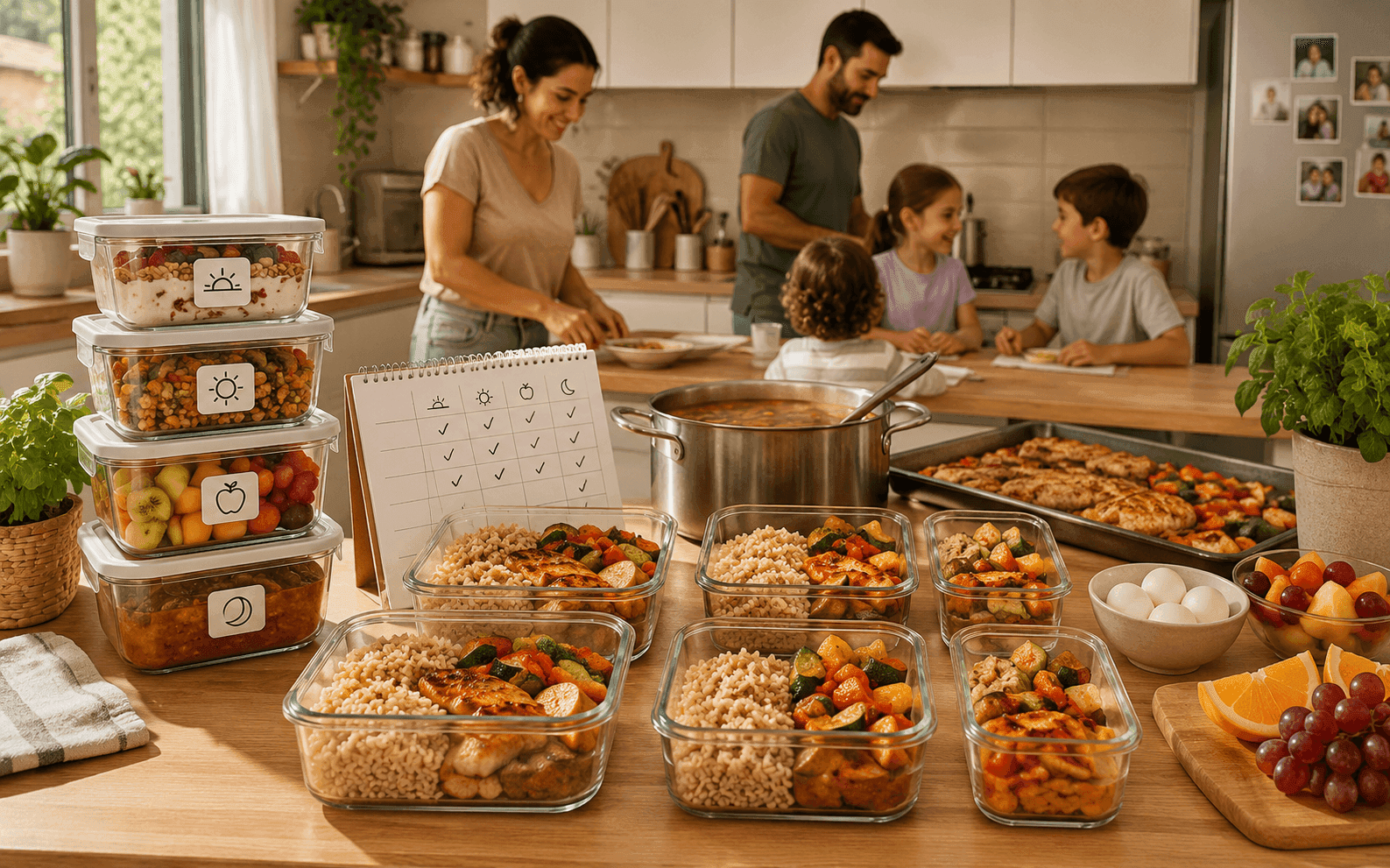
Bnei Brak already has a habit that many other cities could learn from: batch cooking for one day that provides meals for several days. On Thursday or Friday, the kitchen is busy, pots are on the stove, and the whole family has enough food for the entire Shabbat without having to cook again for every meal. The question is how to take that same principle and apply it to the rest of the week, so that a diet plan can work without requiring daily cooking.
For a large family, the challenge is bigger than simply “not having enough time to cook.” It means feeding several people, often with different needs, without turning the kitchen into a twice-a-day, seven-days-a-week job.
The Shabbat Tradition Already Solves Half the Problem
The habit of preparing large quantities of food on one day and spreading them across several days already exists here; it simply isn't always applied beyond Shabbat itself. That same principle—batch cooking once or twice a week—can provide balanced meals for the entire week, not just the days of rest.
The main difference is the type of dishes, not the underlying approach:
- Shabbat meals tend to be richer and more suitable for festive occasions.
- Weekday meals can use the same batch-cooking approach while focusing on lighter dishes that fit everyday routines.
How to Adapt Batch Cooking for a Large Family on a Diet
When cooking for a large family, it helps to think in terms of a “shared base with individual adjustments.” This allows everyone to have a satisfying meal without preparing a separate dish for each person.
Step 1: Choose one protein base that works for everyone.
Chicken breast, lean ground meat, or legumes can be prepared in large quantities and divided according to each family member's needs.
Step 2: Prepare a neutral carbohydrate side.
Rice, whole-wheat pasta, or roasted potatoes can work for both children and adults, with different portions according to individual needs.
Step 3: Separate vegetables according to preference.
Cooked vegetables can be prepared for younger children, while fresh or roasted vegetables can be prepared for adults who want a lighter meal—all from the same weekly grocery shop.
Step 4: Season according to individual preferences.
Keeping the base unseasoned or lightly seasoned until the final stage allows everyone to get the flavor they prefer without cooking two separate meals from scratch.
Example of a Full Day's Menu Based on Batch Cooking
Here is what a full day could look like for an adult in the household who wants to maintain a balanced diet, using ingredients prepared in advance.
Breakfast: A hard-boiled egg prepared in advance with a slice of whole-wheat bread and chopped vegetables, approximately 320 calories. One minute of assembly rather than cooking.
Lunch: Pre-cooked chicken breast (150 g), prepared brown rice (150 g), and cooked vegetables that are reheated, approximately 560 calories.
Snack: Fresh fruit with a handful of nuts, approximately 200 calories.
Dinner: Pre-prepared vegetable soup with a slice of whole-wheat bread, approximately 320 calories. A light dinner based entirely on food that has already been prepared.
Total for the day: approximately 1,400 calories, with most meals requiring only assembly and reheating rather than new cooking.
What to Do When a Large Family Needs Different Portions
No single portion size is going to work equally well for everyone. A few principles can make distribution easier:
- Prepare a large quantity of the base ingredients and let each person take an appropriate portion rather than calculating an individual amount for every family member in advance.
- Keep individual portions in the freezer for family members who eat at different times, so you don't have to cook again specifically for them.
- Keep high-fat additions separate, such as heavy sauces, so each person can add the amount appropriate for them rather than using one standard quantity.
How an AI-Based Meal Planner Can Make Planning for a Large Family Easier
Manually planning meals around both the size of the family and an individual's calorie target can become particularly complicated. An AI-based meal planner can build a weekly menu around your personal calorie target and generate an organized shopping list, allowing the batch-cooking day to focus on actual preparation rather than starting from scratch with calculations and planning every week.
Conclusion
Bnei Brak already has the right principle: batch cooking on one day that provides food for several days. Extending that same approach to weekdays, with shared meal components that can be portioned according to individual needs, makes it possible to maintain a balanced diet for an entire family without turning the kitchen into a daily, twice-a-day workload.