


Flexible Diet Plan in Herzliya: Healthy Eating for an Unpredictable Schedule
Introduction
Herzliya, especially the Herzliya Pituach area, operates at a different pace from most other cities. A meeting that was supposed to last half an hour stretches into two hours, a business flight disrupts the entire schedule, and a lunch planned for 1:00 p.m. ends up happening at 3:30 p.m.—if it happens at all. For people living at this pace, a diet plan that requires eating every meal at a fixed time simply isn't realistic.
The solution isn't trying to force a rigid routine onto an unpredictable day. Instead, it lies in building flexible ingredients that can be assembled into a quick meal at any time, regardless of the exact time or location.
Why a Rigid Diet Plan Fails When There Is No Fixed Schedule
A classic diet plan assumes breakfast happens at a certain time, lunch at another, and dinner at a third. When reality consists of meetings that run late and unexpected travel, that assumption quickly falls apart.
The typical results are:
- Skipping an entire meal because "there wasn't time," followed by overeating at the next meal to compensate
- Ordering something random and unplanned at the last minute simply because it's the only option available
- Feeling like a failure for not following the diet plan, even though the real problem is an unsuitable plan, not a lack of discipline
The Solution: Flexible Ingredients Instead of Fixed Meals
Instead of planning "lunch at 1:00 p.m.," it is better to prepare a supply of ingredients that can be assembled into a meal at any time and anywhere—including at the office, in the car, or between meetings.
The basic structure:
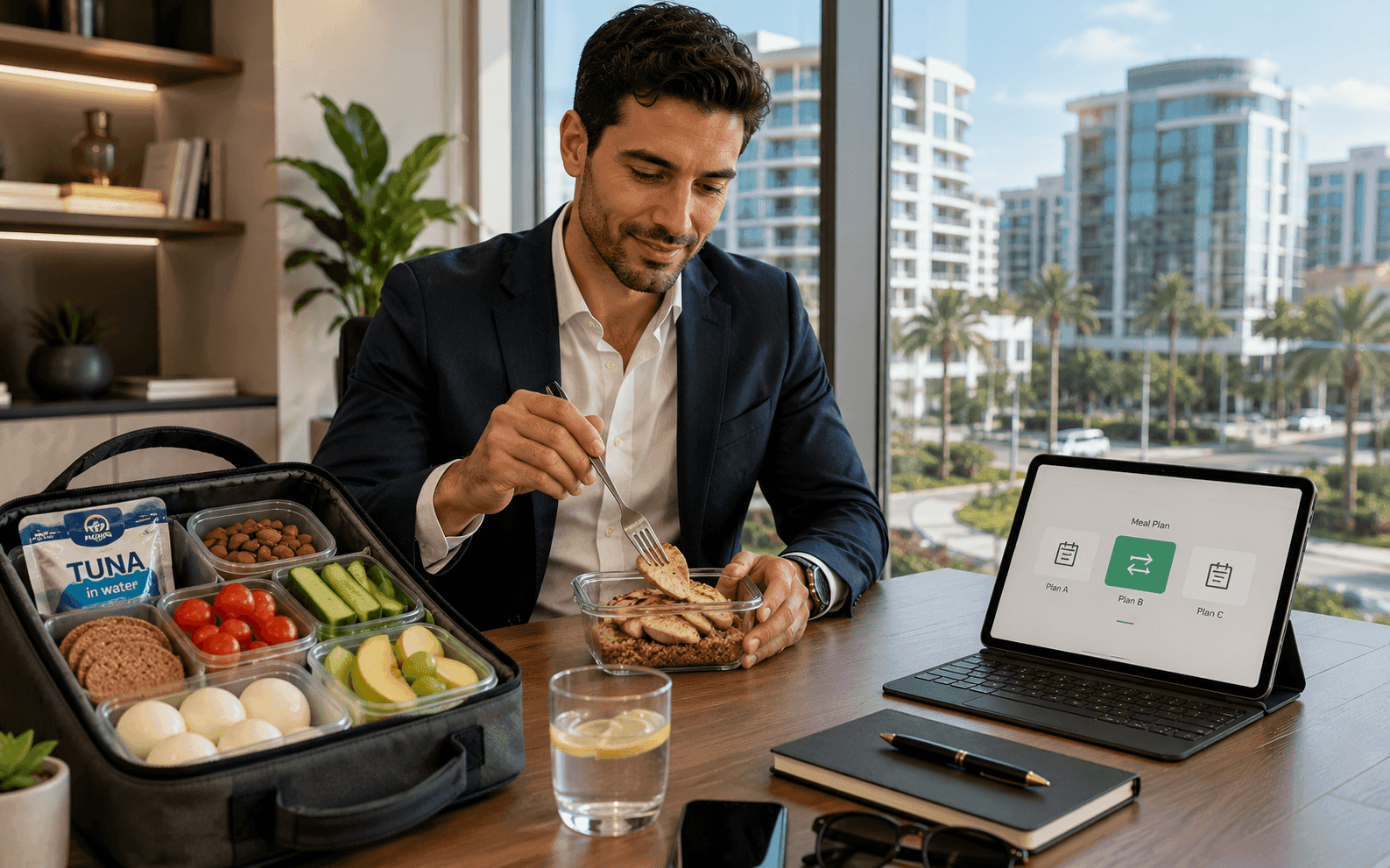
- Protein that can be eaten cold, such as sliced chicken breast, hard-boiled eggs, or canned tuna that doesn't require heating
- A stable carbohydrate source, such as whole-grain crackers, fruit, or homemade energy bites
- A vegetable that requires no preparation, such as pre-cut carrots, cucumber, or cherry tomatoes
Combining these three components and keeping them in separate containers in your bag or office refrigerator creates a complete meal whenever you have a free moment, without depending on the clock.
What It Looks Like When the Entire Day Goes Off Schedule
Here's an example of a planned diet designed with the expectation that the schedule itself will change.
Planned for 8:00 a.m., actually eaten at 9:30 between calls: Hard-boiled eggs prepared in advance with a slice of whole-grain bread, approximately 320 calories. No heating required and easy to eat anywhere.
Planned for 1:00 p.m., actually eaten at 3:00 p.m. after the meeting ends: A container of sliced chicken breast with pre-cooked rice and chopped vegetables, approximately 540 calories. Everything is ready to eat cold and can be assembled immediately.
Flexible snack, whenever there's a free moment: A mixture of nuts and dried fruit, approximately 200 calories. No preparation required.
Planned for 7:00 p.m., actually eaten at 9:00 p.m. after a delayed evening flight: Pre-made lentil soup heated in a microwave, with a slice of bread, approximately 380 calories.
Total for the day: Approximately 1,440 calories, even though every meal happened at a completely different time than originally planned.
What to Always Keep Available, Even on a Sudden Business Trip
People who frequently travel for work need a supply that doesn't depend on having a kitchen at home:
- Quality protein bars that can be carried in a bag without spoiling
- Cans or pouches of tuna or sardines that require no immediate refrigeration before opening
- Fruit that doesn't bruise easily, such as an apple or banana, for eating at any point during the day
- Water and unsweetened tea, so you're not dependent on whatever happens to be available at the airport or hotel
Having a permanent supply like this ensures that even a completely chaotic day doesn't automatically lead to random, unplanned eating.
How an AI-Based Meal Plan Is Particularly Useful for an Unpredictable Schedule
Manually planning flexible ingredients requires thinking ahead about every possible scenario. An AI-based meal planner can create a weekly plan that combines flexible options with planned meals and adapt when something changes, so even a busy and unpredictable day doesn't mean completely abandoning your calorie target.
Summary
A diet plan in Herzliya, particularly for people working in the city's fast-paced tech environment, doesn't need to revolve around fixed meal times that are unlikely to survive the day. A supply of flexible ingredients that can be assembled into a meal at any time and anywhere is what really helps maintain a balanced diet when the day turns out completely differently from what was planned.