




Healthy Restaurants in Jerusalem: Best Options for Calorie Tracking
Introduction
Jerusalem's food scene is famous for heavy, rich dishes, think stuffed vegetables, slow-cooked meats, and bakery treats from the Old City. But scattered through the city center and Mahane Yehuda are a handful of places built specifically around fresh, customizable, and easier-to-track meals.
This list rounds up some of the healthiest options in Jerusalem, with a short note on what makes each one work for calorie counting, along with a method for estimating your meal accurately even when a full nutrition menu isn't posted.
Recommended Healthy Restaurants in Jerusalem
Hasalatia (Hillel Street) A build-your-own salad bar in the city center, near Jerusalem Tower. You start with a base of greens and choose your own toppings, which makes it easy to control exactly what goes into your bowl instead of guessing at a pre-mixed dish.
Salad Express (Jewish Quarter, Old City) A kosher, fully customizable salad bar close to the Western Wall. Because every ingredient is added individually, it's one of the more straightforward places in the city to estimate a meal's calories with real accuracy.
Village Green (Yoel Salomon Street) A long-running vegan restaurant chain with a Jerusalem branch in Nachalat Shiva. The plant-based menu leans on vegetables, legumes, and whole grains, which tend to be easier to log than dishes built around heavy sauces or fried components.
Manou Ba Shouk (Mahane Yehuda Market) A vegan spot inside the market known for handmade pizzas, pastas, and salads. Portion sizes are clearer here than at many market stalls, since dishes are plated rather than piled loosely into a pita.
Opening hours, menus, and exact addresses can change, so it's worth checking the restaurant's page or a delivery app shortly before you go.
Why Build-Your-Own Places Are Easier to Track
A restaurant that lets you choose your base, protein, and dressing separately gives you a level of control that a fixed dish simply doesn't offer:
- You can ask for dressing on the side, then add only the amount that fits your daily target
- Protein portions are visible and separate, rather than folded into a thick sauce where the quantity is hard to judge
- Bowl size is adjustable, small, medium, or large, depending on what you've already eaten that day
A restaurant with a fixed, pre-plated dish requires more guesswork, since there's no way to know exactly how much oil or sauce went in during preparation.
Watch Out for "Healthy" Add-Ons That Aren't as Light as They Look
Even at build-your-own spots, a few common toppings quietly add up:
- Candied or roasted nuts, which can add well over 100 calories in just a couple of tablespoons
- Mayonnaise or tahini-based dressings, ladled on generously and easy to underestimate
- Dried fruit toppings, which carry more sugar and calories per spoonful than fresh fruit of the same size
Asking for these on the side, rather than mixed in, is usually the simplest way to keep a healthy-looking bowl actually light.
Logging Your Meal After You Leave the Restaurant
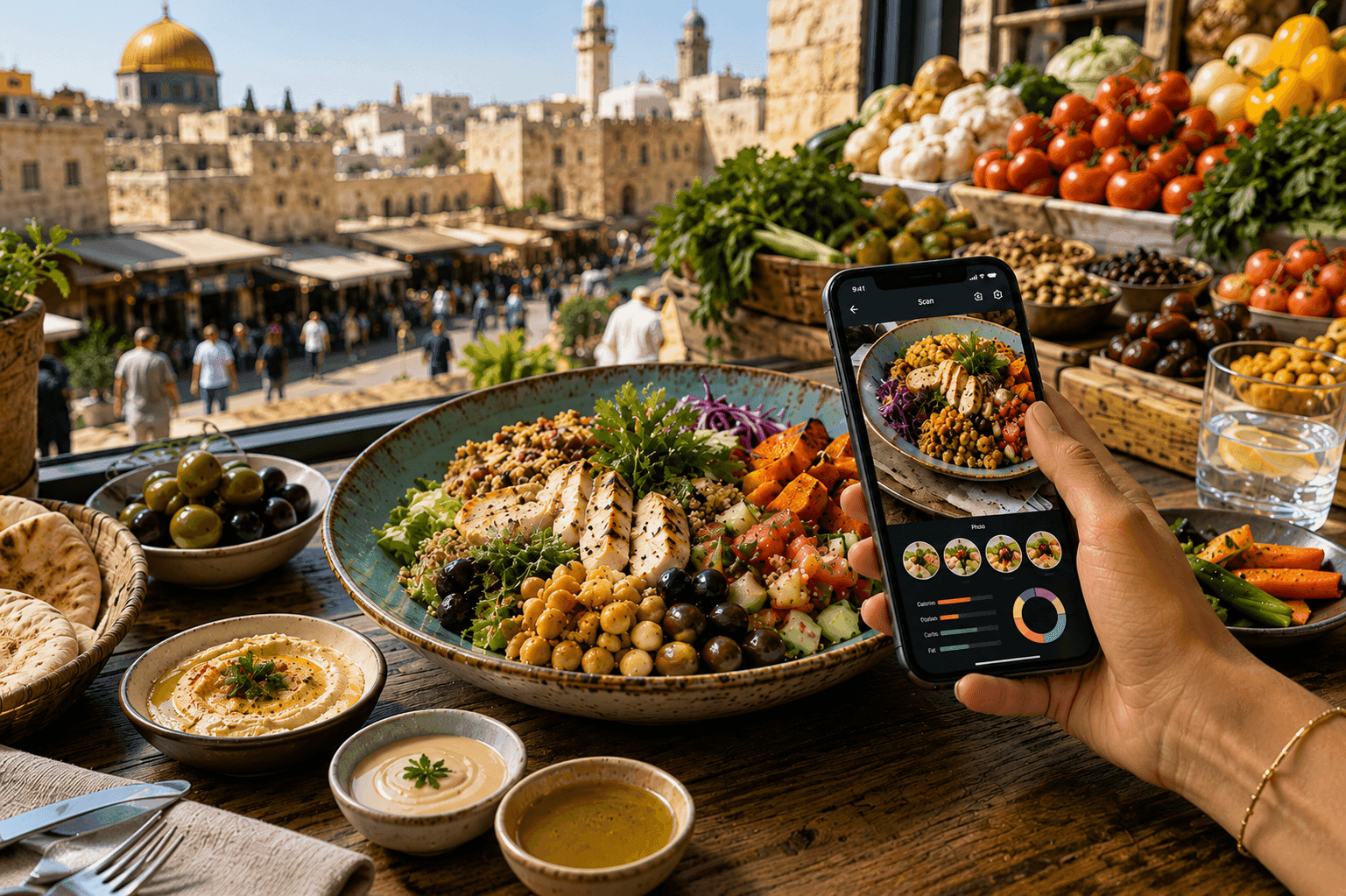
Even with a careful estimate while ordering, it's easy to be off by 100 to 200 calories on a meal eaten out. An AI-powered calorie tracker that lets you log a meal based on the actual ingredients you chose, rather than a generic dish name, gives a far more accurate picture at the end of the day, and helps you decide whether to adjust your other meals accordingly.
Conclusion
Eating out in Jerusalem doesn't have to derail a calorie target. Restaurants built around customizable bowls and salads, paired with attention to dressings and toppings that quietly add calories, make it possible to eat well in the city without resorting to guesswork. Add accurate logging on top of that, and a meal out becomes just another normal part of a balanced week.