




How Many Calories a Day to Lose Weight?
Introduction
The question "how many calories a day to lose weight" is one of the most common questions in nutrition, and also one of the easiest to answer incorrectly. Some people are given a blanket recommendation of 1,200 calories per day regardless of their height, weight, or activity level, and then wonder why they feel tired all the time or why their weight loss stops after a few weeks.
The truth is that there is no magic number that works for everyone. There is a clear formula you can follow, but it needs to be personalized to your body, not copied from a friend, a generic app, or a social media post.
Step One: Understand How Many Calories Your Body Burns at Rest
Before reducing calories, you need to know how many calories your body currently burns to maintain your weight. This number is called your maintenance calories, or TDEE.
It consists of three main components:
- Basal metabolic rate (BMR) – the energy your body uses at complete rest for breathing, heartbeat, and organ function
- Daily activity – walking, standing, working, and any movement that isn't structured exercise
- Planned physical activity – strength training, running, or any structured workout you do
Adding these components together gives you a number that represents your maintenance calories. Consistently eating below this number is what leads to weight loss.
Step Two: How Many Calories Should You Actually Cut?
Once you have an accurate maintenance calorie estimate, the next question is how much to reduce it.
A safe and sustainable calorie deficit is generally between 15% and 25% below your maintenance calories.
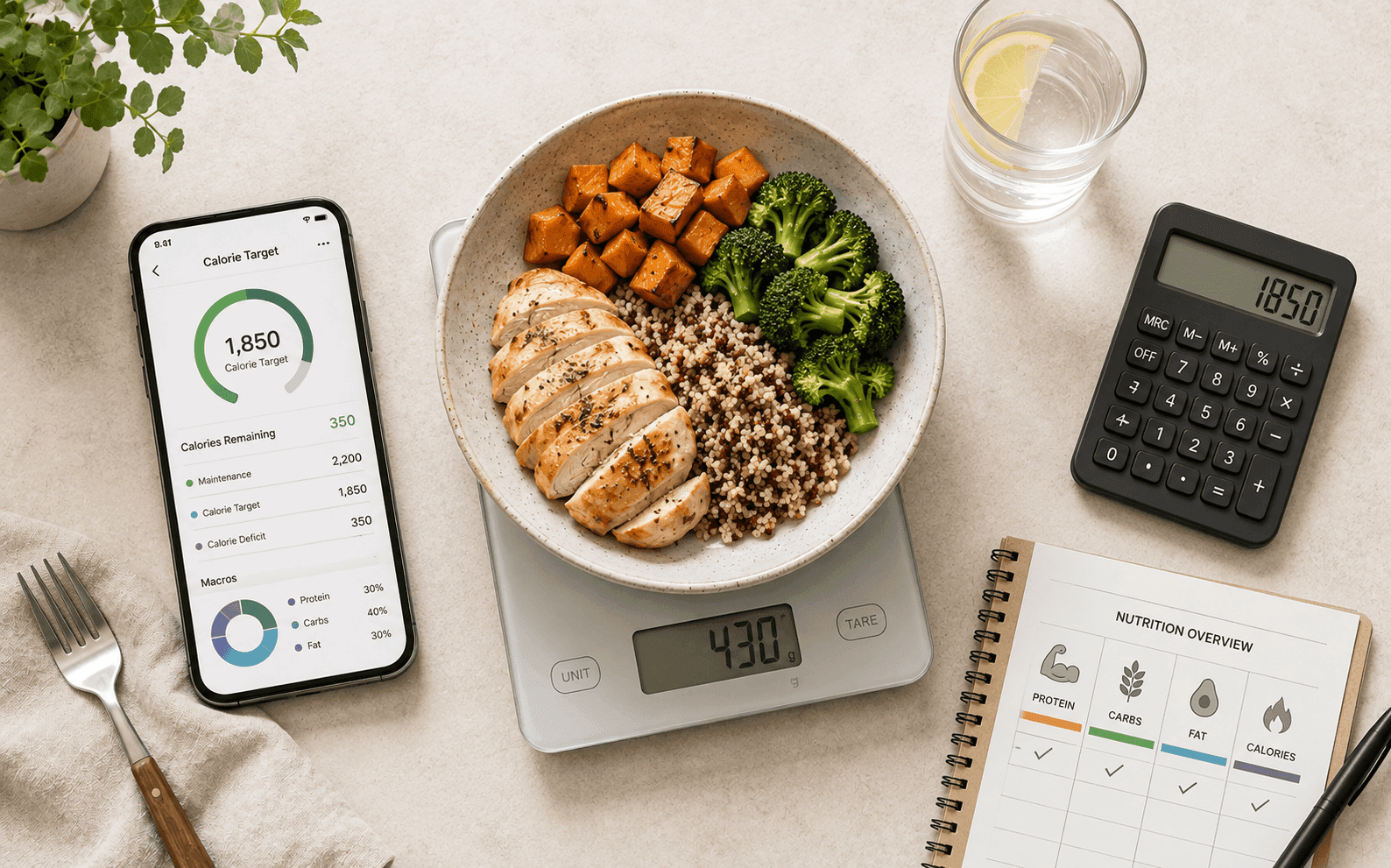
For example, if your maintenance calories are 2,200 per day, a 20% deficit brings you to approximately 1,760 calories per day. This isn't a strict formula for everyone, but rather a reasonable starting point that can be adjusted based on how your body responds.
It's important to remember:
- Too small a deficit – weight loss may be very slow and feel insignificant
- Too large a deficit – may lead to fatigue, muscle loss, and constant hunger
- Moderate deficit – generally provides the best balance between a reasonable rate of weight loss and maintaining energy and normal function
Step Three: Protein Is Not a Minor Detail
Many people focus only on their total calorie intake and forget that the composition of their food matters. When you're eating in a calorie deficit, protein helps preserve muscle mass.
A reasonable range is 1.6 to 2 grams of protein per kilogram of body weight. For example, a person weighing 75 kg would need approximately 120 to 150 grams of protein per day, spread across their meals.
Protein also helps with:
- Longer-lasting fullness, making it easier to maintain a calorie deficit
- Protecting muscle mass while eating fewer calories
- A slight increase in metabolic rate during digestion
A Complete Numerical Example
Let's see what this looks like in practice.
Example: Woman, 165 cm tall, 70 kg, moderate activity level
- Estimated maintenance calories: approximately 2,000 per day
- Moderate 20% deficit: 400 fewer calories
- Daily calorie target: approximately 1,600 calories
- Protein target: approximately 112–140 grams per day
The result is a clear, personalized target rather than a general estimate that ignores her height, weight, and activity level.
When Should You Recalculate Your Calories?
Your body changes over time, so your maintenance calories don't remain constant forever. Losing weight reduces your maintenance calories because a smaller body requires less energy to function.
Signs that it may be time to recalculate:
- Weight loss has stalled for two or more weeks despite consistent tracking
- Persistent fatigue that doesn't improve with rest
- Hunger that's difficult to control despite a high-protein diet
- A noticeable decline in workout performance
Recalculating every four to six weeks can help keep your plan aligned with your changing body.
Common Mistakes That Slow Weight Loss
Even with the right calorie target, a few small habits can interfere with your results:
- Drinking calories without realizing it – juices, sugary drinks, and alcohol
- Estimating portions by eye – a serving of rice or oil is usually larger than it appears
- Being strict on weekdays and letting go on weekends – this can erase the entire calorie deficit created during the week
- Neglecting sleep – insufficient sleep can increase hunger and cravings for sweets the following day
Being aware of these habits, combined with consistent tracking, is usually enough to correct them.
How to Track Without Getting Overwhelmed by Calculations
Calculating everything manually is possible, but it takes time and requires accuracy at every step. A calorie deficit calculator can do the calculation in seconds based on your age, weight, height, and activity level, instead of relying on a generic number that may not actually suit you.
Once you have a clear calorie target, daily tracking becomes much easier with a calorie tracking app that lets you log meals easily and see how you're progressing over time.
Conclusion
There is no single calorie target that works for everyone. There is a clear framework: maintenance calories, a moderate calorie deficit, and sufficient protein, which together create a personalized plan that you can follow consistently. Once these numbers are accurate for your body, weight loss becomes less confusing and more like a clear process that you can plan and track.