




How Many Calories Are in Hummus, Falafel, and Shakshuka?
Introduction
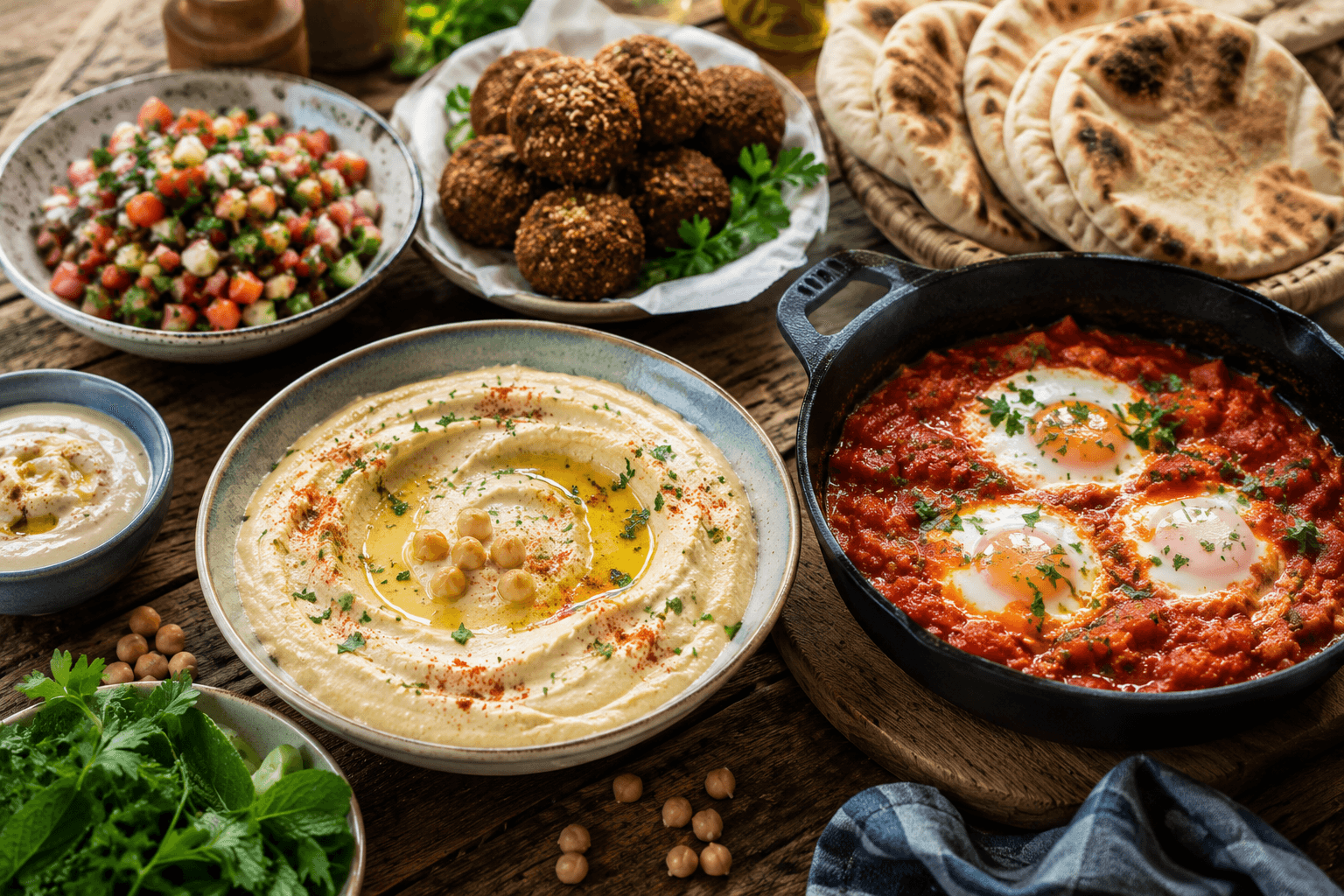
Hummus, falafel, and shakshuka are three of the most popular dishes in Israeli cuisine, but they are also among the most difficult to estimate accurately in terms of calories. The reason is simple: the amount of olive oil, tahini, eggs, and the cooking method can change the calorie content by a significant margin, even when it appears to be the "same" dish served at two different places.
The numbers in this article are reasonable estimates based on common ingredients and preparation methods, not laboratory measurements of a specific meal. If you want to know the calorie content of the exact dish you're eating, especially at a restaurant, the most accurate approach is to weigh the food or photograph it using an AI calorie-tracking app that identifies the actual ingredients.
How Many Calories Are in Hummus?
Hummus itself, made from cooked and mashed chickpeas, is relatively moderate in calories. Most of the calories come from toppings such as tahini, olive oil, and often the pita bread served alongside it.
Estimated Calories Per 100 g
- Plain hummus (chickpeas only, no toppings): 160 to 180 calories
- Hummus with tahini and olive oil (restaurant style): 220 to 280 calories
Typical Restaurant Serving
A typical restaurant serving (approximately 250 g, without pita bread) contains about 550 to 700 calories, depending on the amount of olive oil and tahini used.
What Has the Biggest Impact?
- The amount of olive oil drizzled over the dish
- The ratio of tahini to hummus
- Whether pita bread is served alongside it, which can add 250 to 300 calories to the meal
How Many Calories Are in Falafel?
Falafel is an excellent example of how the cooking method can dramatically affect calorie content. Deep-fried falafel absorbs much more oil than baked falafel, creating a significant difference in calories.
Estimated Calories Per Falafel Ball (15 to 20 g)
- Deep-fried falafel: 55 to 65 calories
- Baked falafel: 35 to 45 calories
Typical Serving
A serving of five falafel balls contains approximately:
- Deep-fried: 275 to 325 calories
- Baked: 175 to 225 calories
It's important to remember that falafel is rarely eaten on its own. A full falafel pita with salad, tahini, and hummus can easily contain 600 to 800 calories, depending on the sauces and toppings.
How Many Calories Are in Shakshuka?
Shakshuka is mainly made from eggs, tomato sauce, and olive oil, but the quantity of each ingredient varies greatly from one recipe to another.
Estimated Calories by Ingredient
- One medium egg: 70 to 80 calories
- Cooked tomato and onion sauce (about 150 g): 80 to 100 calories
- One tablespoon of olive oil: 120 calories
Typical Serving
A typical single-serving shakshuka with two eggs contains approximately 350 to 450 calories, before adding bread or pita.
The biggest factor affecting the calorie count is the amount of olive oil used. Recipes that use generous amounts of oil can easily add another 100 to 150 calories compared to lighter versions.
Why Is It So Difficult to Estimate the Calories in These Dishes?
These three dishes share the same challenge: much of their calorie content comes from oils and sauces that are difficult to see and measure accurately.
Common reasons include:
- Olive oil is absorbed into the food, making it difficult to estimate.
- Portion sizes vary considerably between homes and restaurants, and even from one restaurant to another.
- Side dishes such as pita bread, salad, and pickles are often consumed with the meal but not always included in calorie estimates.
This is why even experienced people often underestimate or overestimate the calorie content of these meals.
How to Get a More Accurate Estimate for Your Meal
The most reliable way to know exactly how many calories are in your meal is to track the actual serving rather than relying on general averages.
An AI-powered calorie-tracking app that recognizes Israeli dishes can identify meals such as hummus, falafel, and shakshuka from a photo and provide a personalized calorie estimate based on the actual portion size and ingredients on your plate instead of using generic averages.
Conclusion
Hummus, falafel, and shakshuka can all be healthy and nutritious parts of a balanced diet, but their calorie content varies widely depending on the amount of olive oil, tahini, and accompanying sides.
The calorie ranges in this guide are intended as practical reference points rather than exact measurements. If you want the most accurate estimate, tracking your actual meal with an AI calorie-tracking app is far more reliable than estimating calories by eye.