


How to Build a Personalized Diet Plan Using AI
Introduction
Searching for a "diet meal plan" online usually leads to the same result: a generic list of meals that someone else created for someone else, with calories that may not match your height, weight, or activity level. The plan might look good on paper, but it wasn't designed for you.
An AI-powered diet meal plan works in the opposite way. Instead of adapting yourself to an existing meal plan, the system builds a plan around your data, preferences, and habits from the start. This article explains how it works in practice and what it means for anyone who wants to lose weight without compromising on taste or convenience.
Why Generic Diet Meal Plans Often Fail
Diet plans distributed online are usually built around one fixed calorie target, regardless of who is reading them.
Common problems include:
- An inappropriate calorie target. A plan built around 1,400 calories per day may be significantly too low for an active person, leading to constant hunger and reduced performance.
- Foods you don't like. A plan that includes foods you don't actually want to eat is likely to be abandoned after a week or two.
- Lack of flexibility. A fixed plan that doesn't account for allergies, dietary preferences, or other restrictions requires tedious manual adjustments at every meal.
The result is a meal plan that looks good in theory but doesn't survive contact with a genuinely busy week.
How AI Builds a Personalized Meal Plan
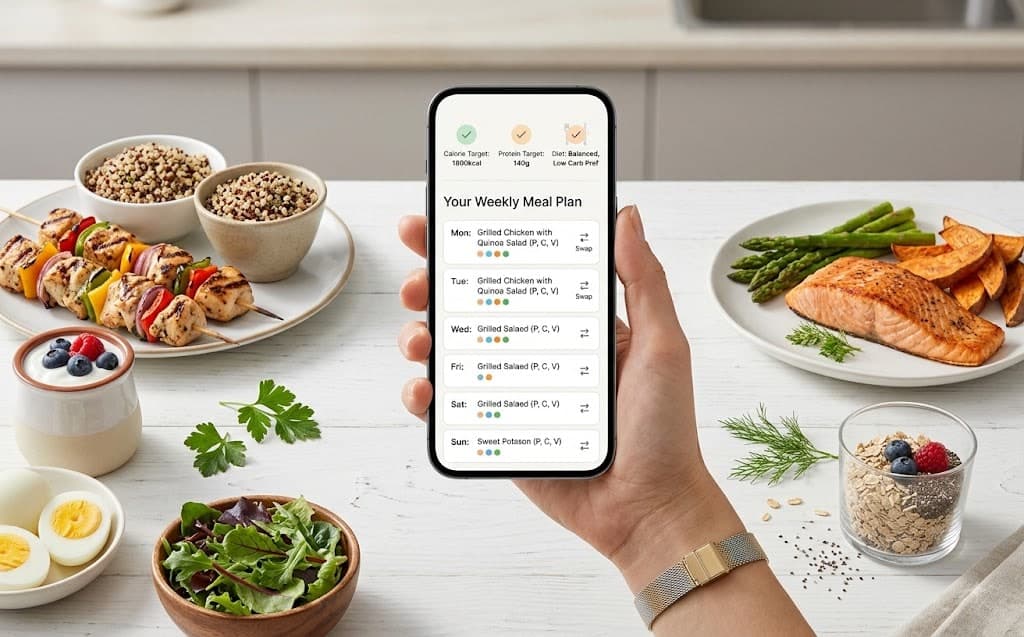
An AI-based meal planner starts from a completely different point: your data, not a generic recipe.
The process typically includes:
- Calculating a personalized calorie and protein target, based on your age, weight, height, activity level, and goal (weight loss, maintenance, or muscle gain).
- Selecting foods based on your preferences, including dietary restrictions such as vegetarianism, veganism, kosher requirements, or predefined allergies.
- Dividing the plan into daily meals, according to the number of meals you prefer—three meals, or three meals with snacks.
- Adjusting recipes to precise quantities, so each meal matches the defined calorie and nutritional target.
The result is a meal plan that starts with your goals and builds upward, rather than starting with a recipe and trying to fit you into it.
Example of an AI-Personalized Day
Here's what it can look like in practice: a daily target of approximately 1,600 calories, with an emphasis on protein.
Breakfast: Two-egg omelet with vegetables, one slice of whole-grain bread, approximately 380 calories
Lunch: Grilled chicken breast, brown rice, vegetable salad with olive oil, approximately 520 calories
Snack: Greek yogurt with berries, approximately 180 calories
Dinner: Baked fish with quinoa and steamed vegetables, approximately 450 calories
Total: Approximately 1,530 calories, with around 100 grams of protein
A plan like this can be generated automatically based on the defined targets and updated automatically if the calorie target or activity level changes.
What Happens When Something Doesn't Work?
Not every food in an automated plan will suit you every day, and that's okay. The advantage of an AI-based meal plan is that you can replace an individual meal without disrupting the entire plan.
- Replace a meal: If you don't feel like eating a particular dish today, replace it with another meal with similar calories and protein without recalculating everything manually.
- Adjust portions: If you're more or less hungry on a particular day, you can adjust portions without losing the overall structure.
- Update preferences: If you add a new dietary restriction, the system can rebuild future meal plans around it.
This flexibility is a key difference between a meal plan that lasts over time and one that gets abandoned after two weeks.
How an AI-Based Meal Plan Saves Planning Time
Beyond personalization, there's a real reduction in effort. Manual meal planning requires calculating calories, choosing recipes, and calculating quantities every week.
An automated meal planner reduces this to:
- A ready-made weekly meal plan built around the targets you define once
- A shopping list automatically generated from the meal plan, without having to go through each recipe individually
- Quick updates when something changes, without rebuilding everything from scratch
For people whose biggest obstacle to following a diet plan is lack of time, this is exactly where the biggest effort is saved.
Conclusion
A diet meal plan that works long-term is one that is built around you, not one that forces you to adapt to it. AI makes this possible by combining personalized calorie and protein targets, foods that match your preferences, and the flexibility to replace and update meals without disrupting the entire plan.
Ready to try a meal plan that's actually built for you? An AI-powered meal planner can create a complete personalized plan in minutes, tailored to your goals and preferences.