


How To Build A Weight-Loss Meal Plan
Introduction
Most meal plans fail for one simple reason: they're built around what someone thinks they should eat, not what they'll actually eat consistently. A plan full of unfamiliar foods, tiny portions, and rigid timing rarely survives a busy week, no matter how well it's calculated on paper.
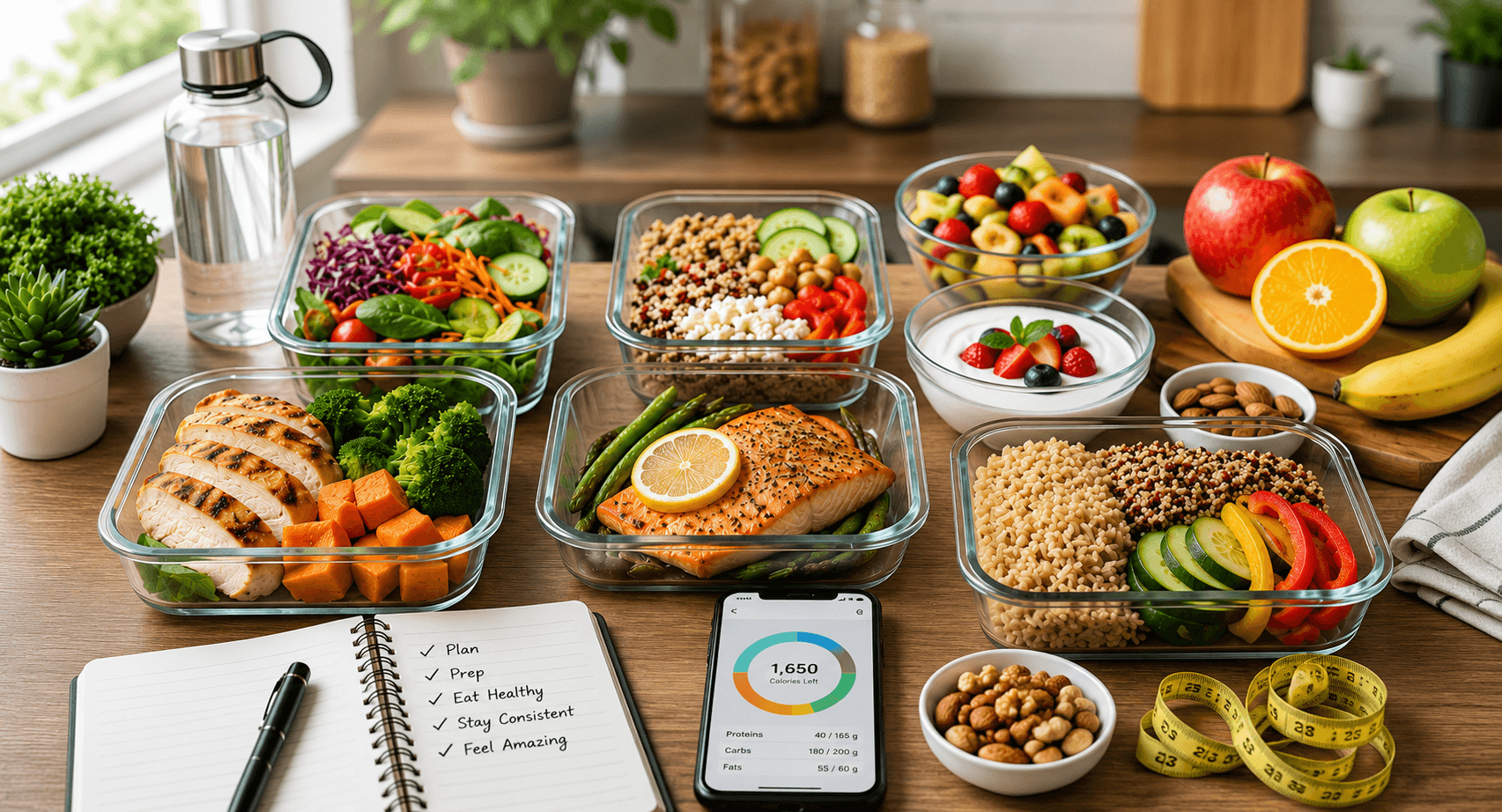
A meal plan that works is built backward from real life, your calorie target, your schedule, and the foods you actually enjoy, then structured so hitting your numbers becomes routine rather than a daily puzzle. Here's exactly how to put one together, followed by a full sample day showing what it looks like in practice.
Step 1: Start With Your Calorie and Macro Targets
Before deciding what to eat, you need to know how much. A meal plan without a calorie target is just a list of food, not a plan for weight loss.
At minimum, you need:
- A daily calorie target based on your maintenance level and desired deficit
- A rough protein target, since this affects which foods anchor each meal
- General carb and fat guidelines, which can be flexible day to day as long as protein and total calories stay consistent
Trying to build meals before locking in these numbers usually means constant adjusting later, which is more frustrating than setting the foundation first.
Step 2: Decide How Many Meals Actually Fit Your Day
There's no required number of meals for weight loss. What matters is choosing a structure you can repeat without constant willpower.
- Three meals, no snacks: works well for people who prefer larger, more satisfying portions and don't like grazing throughout the day
- Three meals plus one or two snacks: suits people with longer gaps between meals or higher hunger levels
- Smaller, frequent meals: can help some people manage hunger and energy more evenly, though it requires more planning
None of these structures is inherently better for fat loss. The right one is whichever fits your schedule and hunger patterns closely enough that you'll actually follow it most days.
Step 3: Build Each Meal Around a Protein Source First
Rather than planning carbs or vegetables first and squeezing protein in afterward, flip the order. Choose the protein source for each meal first, then build the rest of the plate around it.
This single habit does most of the heavy lifting in keeping a meal plan both filling and aligned with a protein target, without requiring separate tracking for every ingredient.
Step 4: Add Carbs and Fat Based on Activity and Preference
Once protein is set for each meal, carbs and fat fill in the rest of the calorie target.
- On higher-activity days or around workouts, lean toward more carbohydrates for energy and recovery
- On lower-activity days, a slightly higher fat, lower carb balance can work just as well
- Keep some flexibility here rather than forcing an identical carb and fat split every single day, since rigid rules are often what makes a plan feel unsustainable
Step 5: Plan for Repetition, Not Novelty
A common mistake is trying to make every meal different to avoid "boredom." In practice, most people who successfully lose weight and keep it off eat a fairly repetitive rotation of meals they enjoy, not a constantly changing menu.
Building 5 to 7 go-to meals that hit your targets, and rotating through them, removes daily decision fatigue and makes shopping and prepping far simpler than planning something new every day.
A Full Sample Day (Roughly 1,700 Calories, Moderate Deficit)
Here's what a complete day looks like when the steps above come together. Numbers are approximate and meant to illustrate structure, not a fixed prescription for every reader.
Breakfast: Greek Yogurt Bowl
- 200g plain Greek yogurt
- 30g granola
- Half a banana, sliced
- 1 tsp honey
- Approx. 420 calories, 24g protein
Lunch: Grilled Chicken and Rice Bowl
- 150g grilled chicken breast
- 150g cooked rice
- Mixed roasted vegetables
- 1 tbsp olive oil dressing
- Approx. 550 calories, 42g protein
Snack: Apple With Peanut Butter
- 1 medium apple
- 1.5 tbsp peanut butter
- Approx. 220 calories, 6g protein
Dinner: Baked Salmon With Vegetables and Quinoa
- 150g baked salmon
- 120g cooked quinoa
- Steamed broccoli and carrots
- Approx. 510 calories, 38g protein
Daily Total: Approximately 1,700 calories, 110g protein
This structure repeats easily across the week with small ingredient swaps, chicken for turkey, salmon for tuna, rice for potatoes, without needing to rebuild the entire plan from scratch each day.
Adjusting the Plan as You Go
A meal plan isn't meant to stay identical forever. Revisit it when:
- Weight loss stalls for two or more weeks despite consistent tracking
- Hunger becomes difficult to manage even with protein-focused meals
- Your activity level changes significantly, more or less training than when the plan was built
- The same few meals start feeling genuinely unsustainable, not just occasionally repetitive
Small adjustments, slightly lower calories, a swapped snack, an added meal, are usually enough. A full rebuild is rarely necessary if the original structure was solid.
Skipping the Manual Planning Entirely
Building a plan by hand works, but it takes time to calculate targets, design meals, and adjust week to week. An AI meal planner for weight loss automates this process, generating a full day or week of meals built directly around your calorie and protein targets, with the option to swap meals you don't like without breaking the plan's overall numbers.
For anyone who wants the structure above without doing the math themselves each week, this removes most of the manual work while keeping the same underlying approach.
Conclusion
A weight-loss meal plan works best when it's built in the right order, calorie target first, protein-anchored meals second, and a repeatable structure that fits real life rather than an idealized version of it. The sample day above shows what that looks like in practice, but the same framework can be rebuilt around any calorie target, food preference, or schedule.