




Kosher Diet Meal Plan for Weight Loss
Introduction
A diet based on kosher dietary laws comes with challenges that most general nutrition guides simply don't address. The separation between meat and dairy affects meal timing, Shabbat and holidays often involve calorie-dense meals that are difficult to avoid completely, and not every product with kosher certification necessarily fits into a calorie-balanced diet.
This guide doesn't ignore that complexity—it builds around it. The goal is a meal plan that respects the kosher dietary rules you follow without sacrificing your calorie target.
The First Challenge: Timing Meat and Dairy Meals
The separation between meat and dairy, including the required waiting periods between meals, directly affects how you can structure a balanced day of eating.
A few principles can make planning easier:
- Plan your main protein sources for the day in advance. If lunch is meat-based, dinner can be built around a dairy protein such as cottage cheese or Greek yogurt, without conflicting with the required waiting period.
- Use pareve foods as a bridge between meals. Fish, legumes, and vegetables are protein- and fiber-containing foods that don't require a waiting period, allowing for greater flexibility when planning your day.
- Avoid "protein gaps" caused by separation requirements. If one meal needs to be pareve because of timing, make sure it still contains a meaningful protein source, such as tofu, lentils, or legumes.
The Second Challenge: Shabbat and Holiday Meals
Shabbat and holiday meals are often high in calories, whether because of the number of dishes served or the traditional cooking methods. Instead of fighting this, you can plan around it.
A practical approach:
- Keep your weekday meals moderately lighter to balance out richer Shabbat and holiday meals, without trying to compensate with an extreme diet afterward.
- Choose the holiday food that matters most to you, and allow yourself to fully enjoy it instead of trying to reduce calories from every dish on the table.
- Avoid arriving at Shabbat extremely hungry, as this often leads to overeating during the first meal.
This approach doesn't eliminate the temporary increase in calorie intake during Shabbat and holidays, but it prevents that temporary increase from becoming a long-term trend.
The Third Challenge: Kosher Products That Aren't Necessarily Diet-Friendly
Kosher certification indicates compliance with Jewish dietary law, not nutritional quality. Many products with highly regarded kosher certification can be high in oil, sugar, or calories, just like any other product.
When choosing kosher products for a diet plan, it's worth checking:
- The nutrition facts label, not just the type of kosher certification
- The ingredient list, since some kosher prepared foods may contain significant amounts of added oil to preserve flavor and freshness
- The actual serving size, which can be substantially different from what might seem like a natural portion to serve
Kosher status and nutritional value are two completely separate factors, and it's important to consider both independently when shopping.
Building a Sample Day
Here's an example of a balanced day that respects meat-dairy separation and stays within a reasonable calorie target.
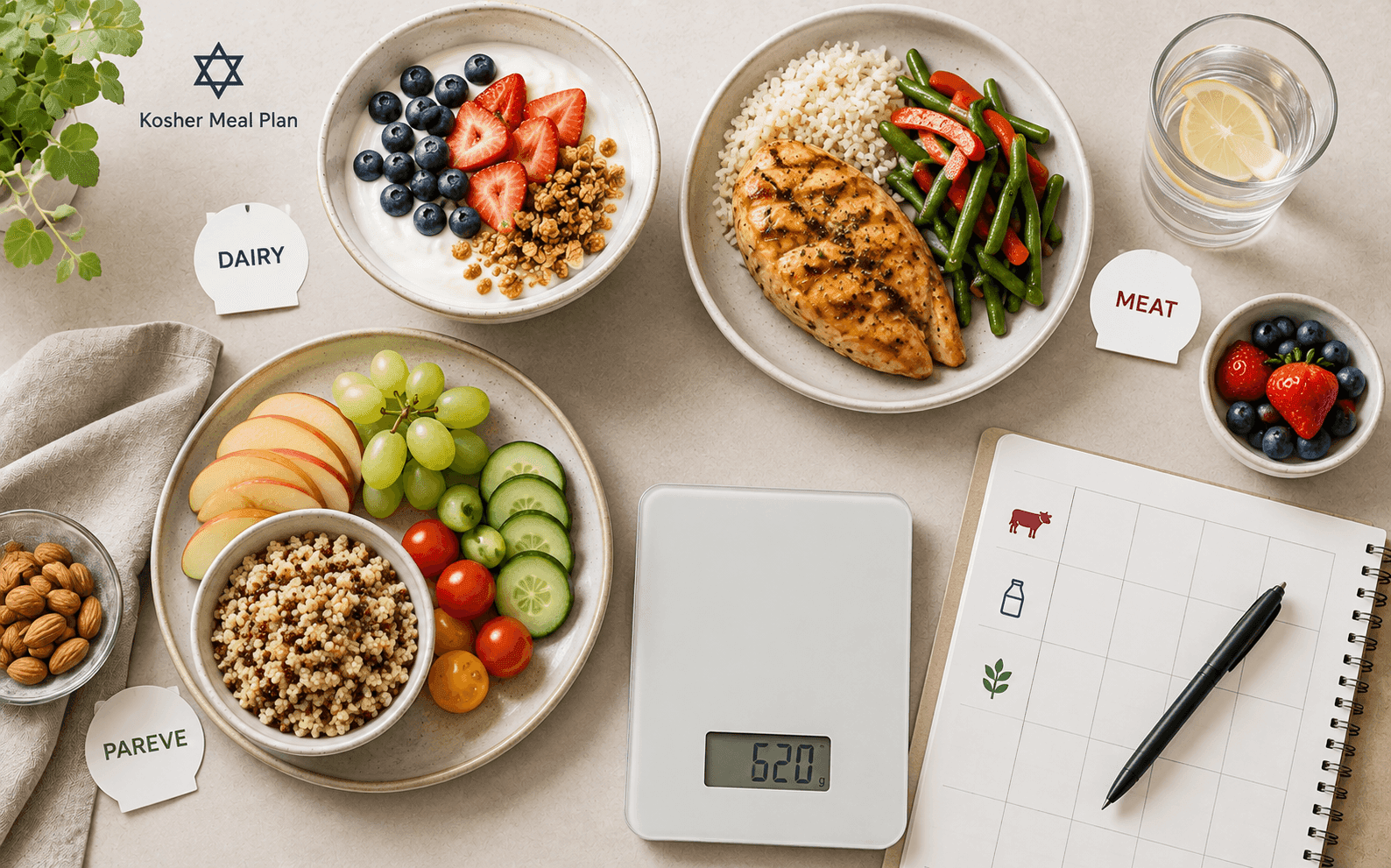
Breakfast (Dairy): Greek yogurt with fruit and granola, approximately 350 calories
Lunch (Meat): Grilled chicken breast with rice and cooked vegetables, approximately 550 calories
Snack (Pareve): An apple with a handful of almonds, approximately 200 calories
Dinner (Dairy, at least three to six hours after lunch, depending on custom): Cottage cheese with quinoa and fresh vegetables, approximately 400 calories
Total for the day: Approximately 1,500 calories, with full separation between meat and dairy throughout the day.
A structure like this can be repeated on most days of the week, with simple substitutions (turkey instead of chicken, cottage cheese instead of yogurt) to maintain variety without creating a new meal plan every day.
How to Track Everything Without Getting Complicated
Tracking a meal plan that needs to account for both meat-dairy separation and calorie targets can feel more complicated than standard calorie tracking. A kosher calorie-tracking app can help with exactly this, allowing you to log meals while taking meat, dairy, and pareve classifications into account alongside regular calorie tracking.
For anyone who wants a ready-made meal plan that considers both kosher requirements and personal goals, an AI meal planner can create a weekly plan that respects both requirements at the same time, instead of requiring you to plan everything manually.
Conclusion
A kosher diet doesn't have to be a compromise between observing religious requirements and meeting your health goals. With thoughtful planning around meat-dairy separation, a realistic approach to Shabbat and holiday meals, and genuine nutritional evaluation of kosher products, you can create a meal plan that respects both without unnecessary compromises.