




Nutrition for Shift Workers in Hadera: Training, Macros & Meal Timing
Introduction
Hadera is a city with a high concentration of industrial facilities, a port, and a power station, alongside a significant population working rotating shifts—morning, evening, and night—rather than fixed office hours. For someone who trains while working shifts, this creates a challenge that does not exist for people who exercise according to a consistent schedule: the body has to adapt to training at different times each week, as well as to nutrition that works across all of them.
This guide focuses specifically on this group—people whose training and nutrition plans must fit around a shift schedule rather than a fixed daily routine.
Why Shift Work Requires a Different Nutritional Approach
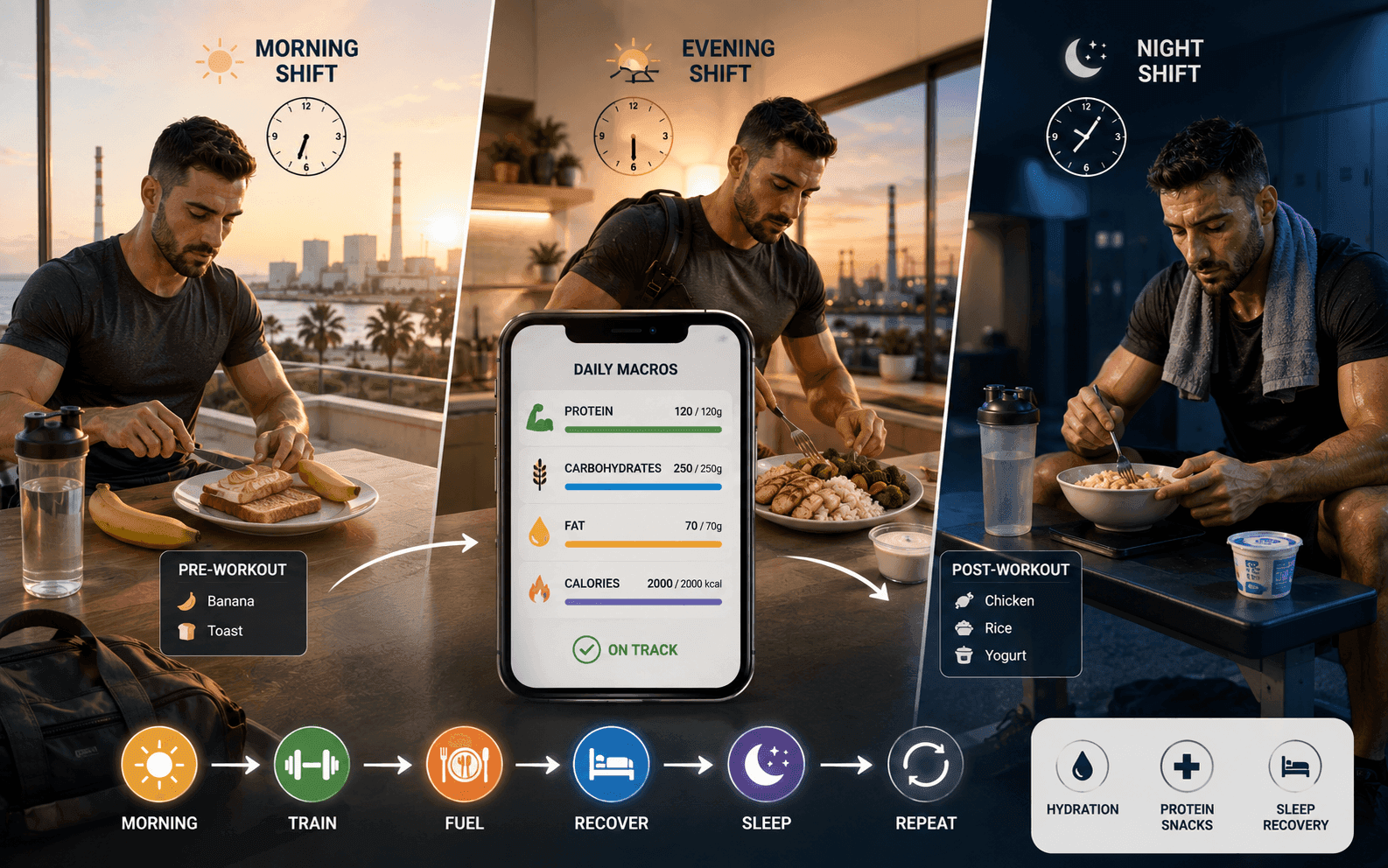
Training after a night shift is completely different from training before an early morning shift, even when it involves the same person and the same workout program.
- After a night shift, the body is already fatigued from extended hours of wakefulness, so nutrition around the workout should support recovery without adding unnecessary heaviness.
- Before an early morning shift, there is only a short window for a pre-workout meal, which calls for something light and convenient rather than a full meal.
- Between evening and morning shifts, sleep schedules themselves change, which also affects when the body actually feels hungry and ready to eat.
An athlete who ignores these differences and tries to follow the same fixed meal schedule for every type of shift will often arrive at a workout without sufficient available energy or without enough time for recovery.
Building a Daily Nutritional Target That Doesn't Depend on the Clock
The practical solution is not to plan meals according to the clock, but according to an overall daily macronutrient target that can be divided flexibly depending on that day's shift. A macro calculator provides this daily target based on factors such as weight, goals, and type of training, so even when shifts change from week to week, total protein, carbohydrate, and fat intake can remain consistent.
The advantage of this approach is that it does not depend on having meals at fixed times. Instead, the focus is simply on reaching the required total by the end of the day, regardless of whether the day began at 6 a.m. or 10 p.m.
Meal Timing According to Shift Type
Several principles can help adapt nutrition to the three most common types of shifts:
Shift Type | Pre-Workout Meal | Main Focus |
|---|---|---|
Morning shift, workout before | Light meal with readily available carbohydrates | Avoiding heaviness before early physical exertion |
Evening shift, workout after | Protein-rich recovery meal | Supporting muscle repair after a full workday |
Night shift, workout after | Light meal with protein and moderate carbohydrates | Supporting recovery without feeling too full before sleep |
This table is a starting point, but it demonstrates why a single fixed meal plan does not really work for someone whose shifts change every week.
Managing Irregular Sleep That Affects Appetite
Irregular sleep, which is very common among shift workers, directly affects feelings of hunger and fullness and can sometimes lead to strong hunger at unexpected times.
- Always keep a convenient source of protein available, such as yogurt or hard-boiled eggs, for times when hunger arrives unexpectedly.
- Avoid overly heavy meals close to bedtime after a night shift, so you do not further compromise sleep quality, which may already be challenging.
- Stay consistently hydrated, because prolonged fatigue from rotating shifts can sometimes be mistaken for hunger.
Summary
A nutritional plan for someone who trains in Hadera should account for the reality of rotating shifts rather than relying on a fixed workout schedule. A clear daily macro target, meals adapted to the specific shift, and attention to irregular sleep and its effect on appetite are what make it possible to train seriously even when the schedule changes from week to week.