




Ramla Street Food Calories: Knafeh, Baklava, Sambusak & More
Introduction
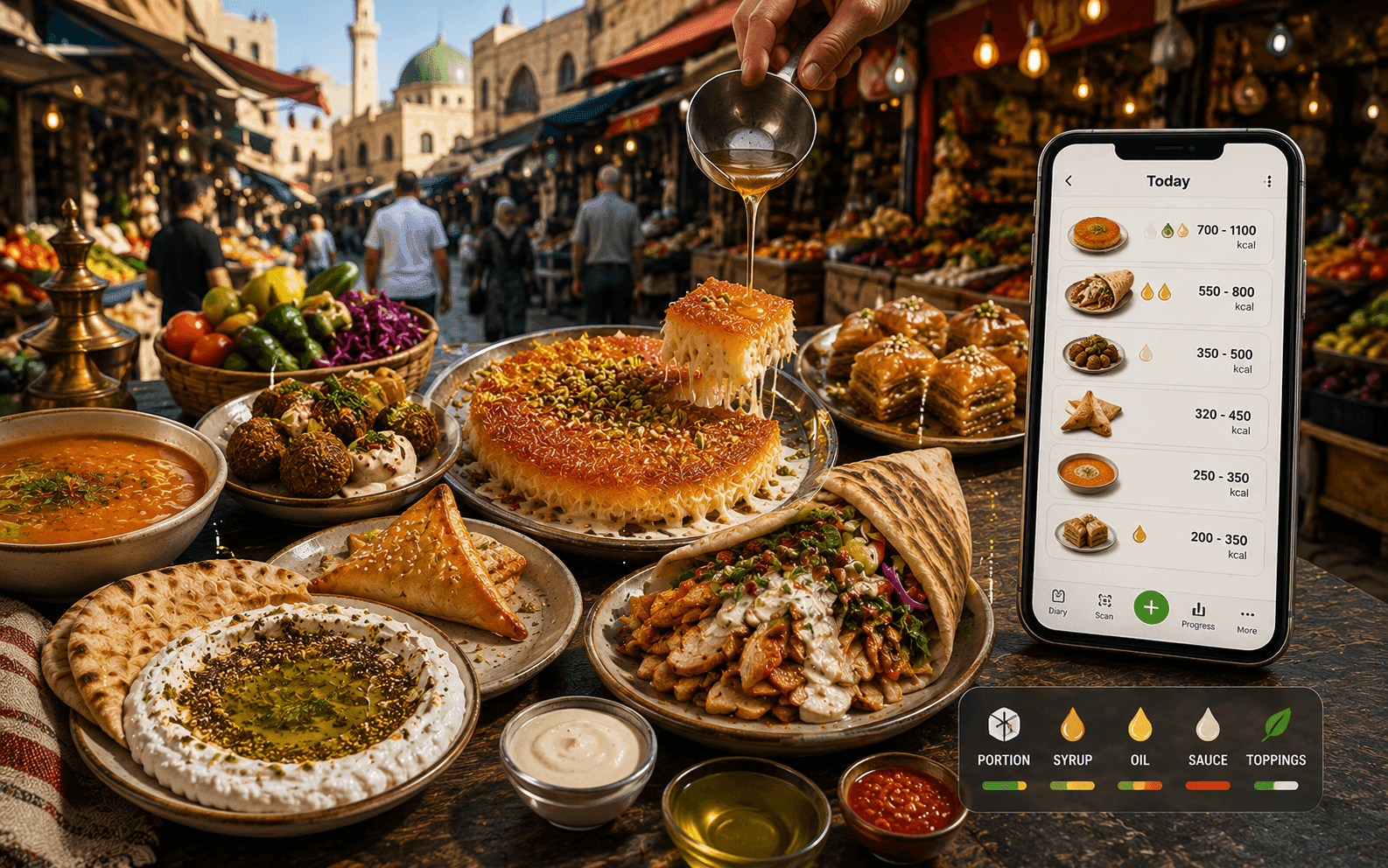
The Old Market in Ramla, along Herzl Street and the central bus station area, offers a unique combination of Middle Eastern, Bedouin, and Mediterranean cuisine shaped by generations of mixed culinary traditions. Fried sambusak, hot knafeh served straight from the tray, and syrup-soaked baklava are just some of the foods that make the street food here different from what you find in other Israeli cities.
The problem is that these traditional and sweet dishes tend to be much higher in calories than they initially appear. This guide provides calorie estimates for some of the city's most popular street foods.
Ramla Street Food Calorie Table
Dish | Typical Serving Size | Estimated Calories |
|---|---|---|
Meat- or potato-filled sambusak | 1 medium piece | 180–230 |
Nabulsi knafeh, individual serving | Approx. 150 g | 450–550 |
Baklava, 2 pieces | Approx. 80 g | 300–380 |
Pita with labneh, za'atar, and olive oil | 1 whole pita | 400–500 |
Turkey shawarma in pita with hummus and salad | Approx. 320 g | 600–700 |
Red lentil soup with pita | Medium bowl with pita | 350–450 |
Falafel with eggplant sauce and tahini | Approx. 280 g | 550–650 |
These figures reflect an average street-stall serving. Particularly with knafeh and baklava, the amount of syrup added at the end of preparation can vary significantly from one place to another, so the actual calorie count may fall outside the ranges shown here.
The Hidden Ingredient: Sugar and Syrup in Traditional Desserts
Unlike savory dishes, where oil and sauces are often the hidden sources of calories, syrup is the main factor that can significantly increase the calorie content of Ramla's traditional sweets:
- Knafeh is served with hot sugar syrup that soaks into the cheese and shredded pastry and can sometimes add around 100 additional calories to the dish on its own.
- Baklava is soaked in sugar and rose-water syrup, which penetrates the layers of pastry and increases the calorie density of a relatively small piece.
- Roasted nuts as a topping add flavor but also contribute dozens of additional calories that can be easy to overlook.
Someone who eats two pieces of baklava as a “small taste” can easily consume more calories than they would in an entire meal.
How to Choose Street Food in Ramla Without Giving Up the Local Flavor
There is no need to avoid traditional foods in order to maintain a reasonable calorie target. You simply need to know which factors make the biggest difference:
- Ask for knafeh with less syrup, or request the syrup on the side instead of poured over the entire serving.
- Split a piece of baklava in half instead of eating a whole piece as a quick dessert.
- Choose turkey shawarma over beef shawarma when looking for a lower-fat option among pita-based meals.
- Choose pita with labneh instead of falafel with eggplant sauce when the goal is a lighter meal.
Choices like these can reduce a typical meal by 150–250 calories without sacrificing the culinary experience that makes Ramla's market special.
Tracking Traditional Dishes That Don't Appear in Standard Nutrition Databases
Dishes such as Nabulsi knafeh or sambusak often do not appear accurately in general food databases because they are specific to local cuisine and are prepared differently from one food stall to another. An AI-powered calorie-tracking app can allow you to photograph the dish and receive an estimate based on the actual ingredients, rather than relying on a generic value that may not match the meal you were actually served.
Summary
Ramla's street food carries a rich culinary identity that combines Middle Eastern cuisine with traditional sweets, which is precisely what makes its calorie content more challenging to estimate than that of many other cities. From relatively light sambusak to syrup-rich knafeh and baklava, the calorie range can be substantial, and the difference between a mindful choice and an impulsive order can amount to hundreds of calories in a single day.