




Reading UK Food Labels: Calories Per 100g Explained
Introduction
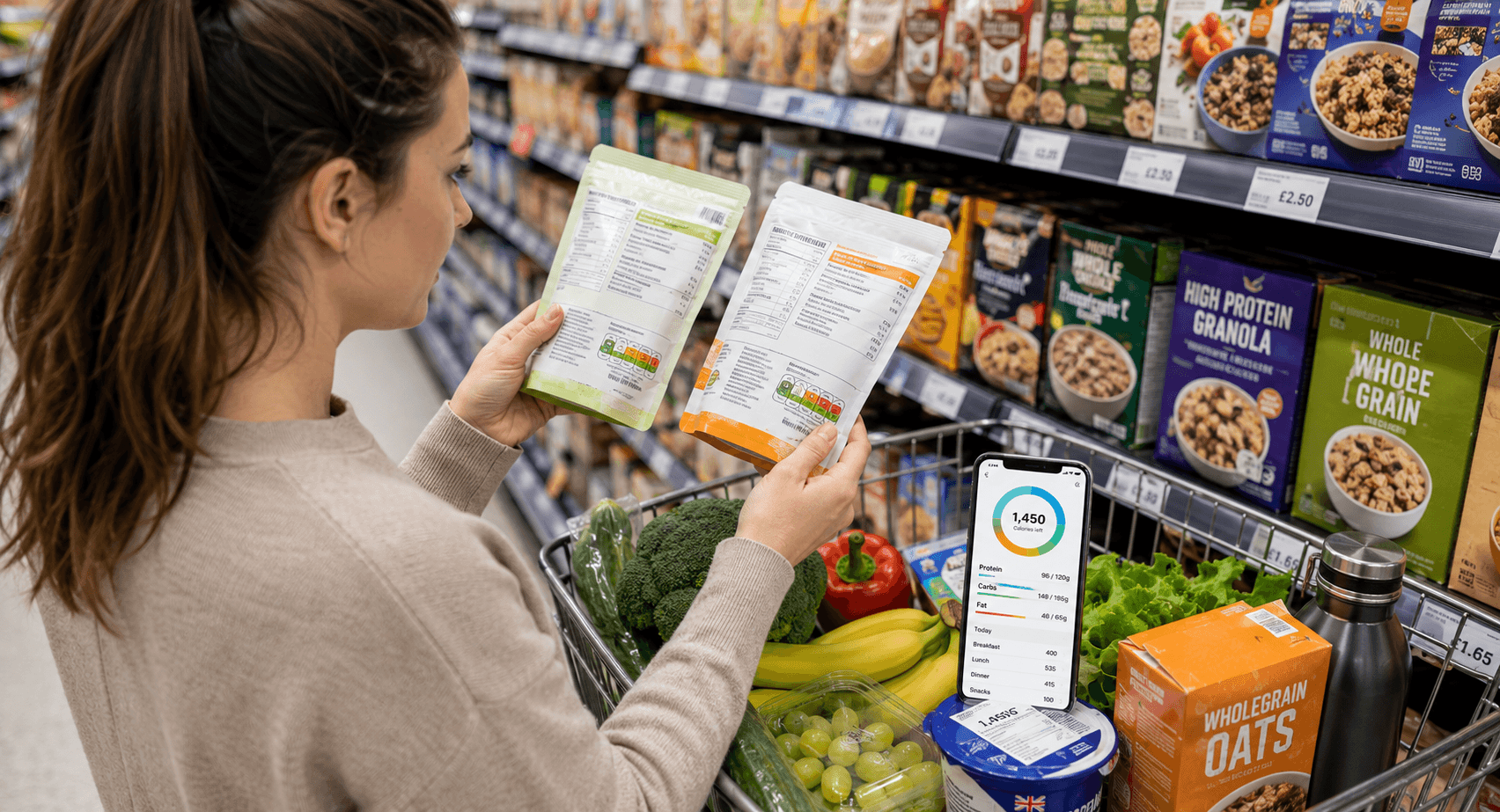
Pick up almost any packaged food in a UK supermarket and you'll see two calorie figures on the label, one "per 100g" and one "per portion," often sitting next to a row of red, amber, and green colours. For a lot of shoppers, this ends up being more confusing than helpful, especially when the portion size on the pack doesn't match what anyone would actually eat in one sitting.
This guide breaks down exactly what each part of a UK nutrition label means, why the per 100g figure matters more than most people realise, and how to actually use it to compare products properly rather than just glancing at the colours.
Why UK Labels Show Two Different Calorie Figures
UK food labelling guidance, based on retained EU food information regulations, requires energy and nutrient values to be shown per 100g (or per 100ml for liquids), with an additional "per portion" figure optional but very commonly included by manufacturers.
The reasoning behind having both:
- Per 100g gives a standardised figure that lets you compare any two products fairly, regardless of pack size or serving suggestion
- Per portion gives a rough idea of what one typical serving contributes, though this figure is set by the manufacturer and doesn't always match how much someone actually eats
The catch is that "per portion" is often based on a portion size that's smaller than realistic. A bag of crisps might list its portion as half the bag, or a pasta sauce might define a portion as far less than most people would actually pour onto a plate.
Why Per 100g Is the Number Worth Trusting
Because manufacturers can set their own portion sizes, the "per portion" figure is where labels can end up looking more favourable than they are in practice. Per 100g doesn't have this flexibility, it's a fixed, standardised measurement that makes genuine comparison possible.
This matters most when:
- Comparing similar products. Two breakfast cereals with different portion sizes listed can look similar at a glance, but comparing calories per 100g shows which one is actually more calorie-dense.
- Estimating your real intake. If you know roughly how many grams you actually eat, multiplying that against the per 100g figure gives a far more accurate calorie count than trusting the pack's suggested portion.
- Spotting inflated portion claims. A product listing a very small "portion" alongside a high per 100g figure is often trying to make the per-portion number look better than the food actually is.
How to Use Calories Per 100g in Practice
Turning the per 100g figure into a usable number for your own meal takes one simple calculation.
Formula: (grams eaten ÷ 100) × calories per 100g = calories consumed
Example: A pasta labelled at 350 calories per 100g, and you serve yourself 180g.
(180 ÷ 100) × 350 = 630 calories
This is a more reliable figure than relying on the pack's stated "portion," especially for foods like pasta, rice, cereal, or sauces, where actual serving sizes vary widely from what's printed on the label.
Understanding the Traffic Light Colours
Alongside the calorie and nutrient figures, most UK packaged foods carry a colour-coded system, red, amber, or green, for fat, saturated fat, sugars, and salt.
- Green generally means a lower amount of that nutrient per 100g
- Amber means a medium amount
- Red means a higher amount, worth keeping an eye on if eating that food regularly
It's worth noting that traffic lights don't cover calories directly, they're based on fat, saturated fat, sugar, and salt content. A product can carry several green labels and still be relatively high in calories, particularly for calorie-dense foods like nuts or oils that are nutritionally sound but naturally energy-dense. Colours are a helpful quick reference, but they're not a substitute for checking the actual calorie figure when that's your specific goal.
Common Mistakes People Make Reading UK Labels
A few habits quietly lead to inaccurate calorie estimates even when someone is trying to read labels carefully.
- Assuming the pack's portion size matches what they actually eat, when real servings are often noticeably larger
- Reading only the "per portion" column and skipping the per 100g figure entirely, missing the number that actually allows fair comparison
- Judging a product by traffic light colours alone, without checking whether it's actually calorie-dense despite green labels elsewhere
- Forgetting that multi-serving packs use total portions, so a bag listing "3 servings" needs the whole pack calculation adjusted if it's eaten in one sitting
Making Per 100g Maths Easier
Doing the (grams ÷ 100) × calories calculation by hand for every meal adds up, especially across several ingredients in one dish. A UK calorie counter app can handle this automatically, scanning a barcode or photo and applying the correct per 100g maths based on your actual portion, rather than the manufacturer's suggested serving.
This removes the need to manually multiply figures from every label and keeps your daily total based on what you actually ate, not what the pack assumed you'd eat.
Conclusion
The per 100g figure on UK food labels is the most reliable number for real comparison and accurate tracking, even though the per portion column often gets more attention at a glance. Once you know how to apply it to your own actual serving size, rather than the one printed on the pack, calorie estimates become considerably more accurate, and product comparisons become genuinely fair rather than shaped by whatever portion a manufacturer chose to print.