




Weekly Meal Prep in Haifa: A Simple Calorie-Balanced Plan
Introduction
Anyone who lives in Haifa—whether they work at the Technion, in the Haifa Bay area, or in the city center—knows the feeling: a long workday is over, and there is no energy left to cook a balanced meal from scratch. This is exactly where many diet plans fail, not because the plan itself is bad, but because it requires daily cooking that simply does not fit into a busy routine.
The real solution is not to cook lower-quality food, but to cook less often. Proper planning on one or two days a week can provide a complete, varied, and calorie-balanced meal plan without requiring you to spend every evening in the kitchen.
Why Daily Cooking Is Often the Problem, Not the Solution
A diet plan based on freshly cooked food at every meal sounds ideal on paper, but in practice it tends to fail for two main reasons:
- Lack of time after a workday leads to quick, less-planned solutions, such as ordering food or grabbing convenient snacks.
- Decision fatigue means that even with good intentions, it is often easier to skip cooking than to maintain the routine every day.
The solution that works in practice is to separate “prep days” from “eating days,” so that the difficult nutritional decisions are made once a week rather than every evening.
How to Build an Entire Week Around One Prep Day
Effective weekly planning starts by choosing one fixed day, usually a weekend or day off, and building the meal plan around it.
Step 1: Choose three to four basic ingredients.
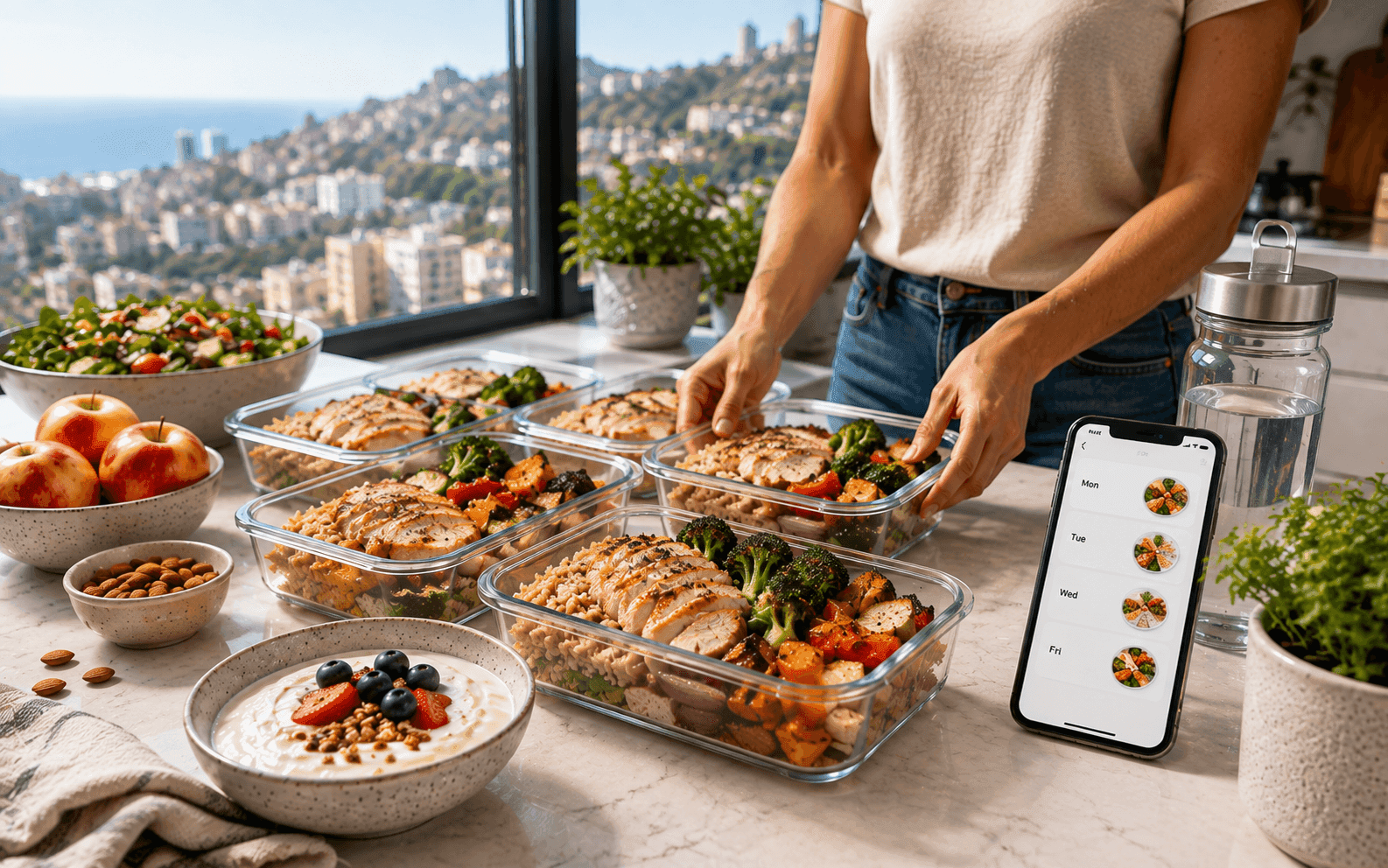
For example, chicken breast, brown rice or quinoa, and roasted vegetables. These ingredients can easily be combined into different meals throughout the week.
Step 2: Cook in large batches.
Instead of preparing a single serving, make enough for four to five meals and store the portions in separate containers in the refrigerator or freezer.
Step 3: Prepare additions that can be easily changed.
Different sauces, seasonings, or an additional fresh vegetable can turn the same basic ingredients into a different meal each time, without requiring additional cooking.
Step 4: Keep one day flexible.
Not every meal needs to be planned in advance. Leaving one day open allows room for a spontaneous meal without disrupting the entire weekly plan.
Example of a Full Day Meal Plan (Based on Meal Prep)
Here is what an entire day can look like when it is built around ingredients prepared at the beginning of the week.
Breakfast: Greek yogurt with granola and fresh fruit, approximately 350 calories. No cooking is required—just assemble the ingredients.
Lunch: Pre-cooked chicken breast (150 g), pre-cooked brown rice (150 g), and roasted vegetables reheated in the microwave, approximately 550 calories. Three prepared ingredients are simply assembled rather than freshly cooked.
Snack: An apple with a handful of almonds, approximately 200 calories. No preparation is required.
Dinner: Pre-cooked quinoa (120 g) with canned tuna and a fresh vegetable salad prepared in a few minutes, approximately 450 calories. This combines a prepared ingredient with a quick fresh addition.
Total for the day: approximately 1,550 calories, with most meals requiring assembly rather than cooking in real time.
Markets and Good Places to Shop for Weekly Groceries in Haifa
Part of successful weekly planning also depends on where you buy your ingredients. Talpiot Market and the Wadi Nisnas area offer fresh fruits and vegetables at reasonable prices and are well suited for buying larger quantities for your weekly meal-prep day. Health-food stores in the Hadar and Carmel areas also offer options such as whole grains and pre-cooked legumes, which can reduce preparation time even further.
What to Do When Something in the Meal Plan Doesn't Work Midweek
Even with good planning, sometimes an ingredient runs out earlier than expected, or you simply don't feel like eating the same thing again. Here are a few quick solutions:
- Replace the main protein with a similar option you already have at home, such as turkey instead of chicken, without changing the rest of the meal.
- Add a different sauce or seasoning to give the same basic ingredient a new flavor without preparing an entirely new meal.
- Keep one frozen meal in reserve for days when your meal prep does not cover everything, so you don't end up relying on unplanned fast food.
How an AI-Based Meal Plan Can Make the Process Even Easier
Manually planning a weekly meal-prep day requires calculating calories, choosing ingredients, and organizing which foods work together for different meals. An AI-powered meal planner can automate this process by creating an entire weekly meal plan around your calorie target and generating an organized shopping list accordingly. This makes the meal-prep day simpler and more focused instead of requiring you to start from scratch every week.
Conclusion
A diet plan that works in Haifa—or anywhere else—does not need to require cooking every evening. Separating one meal-prep day from the days when you actually eat, building meals around flexible staple ingredients, and leaving room for flexibility during the week can turn a balanced diet from a daily mental burden into a routine that is easier to maintain over time.