


עברית: סריקת ברקוד לעומת צילום מזון: מה מהיר יותר?
מבוא
שתי שיטות לרישום מזון החליפו במידה רבה את ההקלדה והחיפוש הידניים: סריקת ברקוד או צילום תמונה. שתיהן מבטיחות להפוך את המעקב למהיר יותר, אבל הן נועדו למצבים שונים באמת. שימוש בשיטה הלא נכונה עבור ארוחה מסוימת הוא לעיתים קרובות הסיבה לכך שאנשים מניחים ששיטה אחת "טובה יותר", כאשר בפועל פשוט נעשה שימוש בשיטה שאינה מתאימה למזון שנמצא מולם.
זהו השוואה ישירה ומעשית בין שתי השיטות, שמראה היכן כל אחת מהן מנצחת מבחינת מהירות ודיוק, ומדוע כלי המעקב המהירים ביותר אינם בוחרים רק בשיטה אחת — אלא משתמשים בשתיהן בהתאם למה שבאמת אוכלים.
איך כל שיטה עובדת בפועל
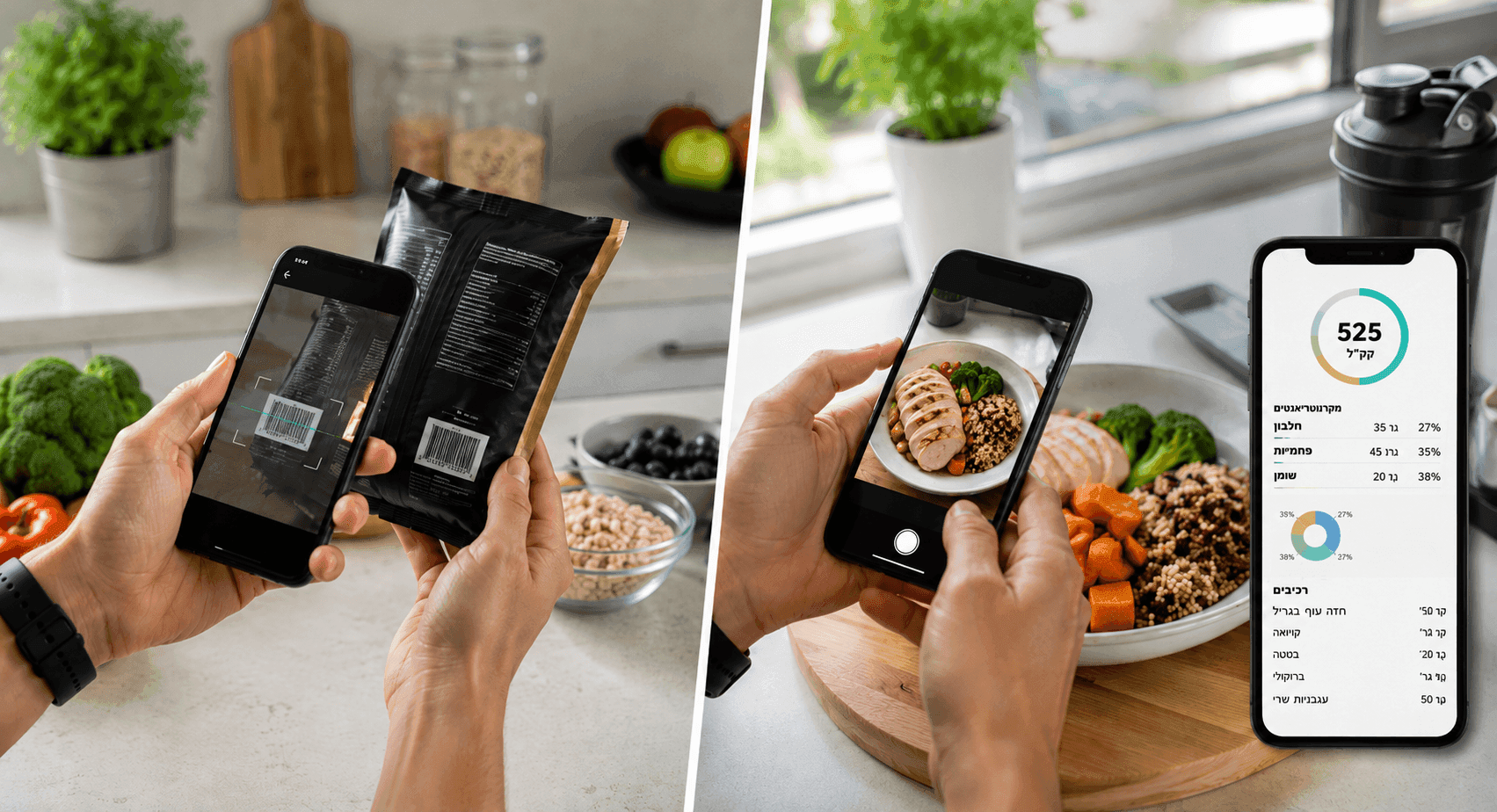
סריקת ברקוד קוראת את הקוד הייחודי של המוצר ומביאה את נתוני התזונה המדויקים שלו ישירות ממאגר מידע של היצרן או הקמעונאי. אין כאן צורך בהערכה — הנתונים מגיעים ישירות מהתווית הרשמית של המוצר.
רישום באמצעות תמונה משתמש בזיהוי תמונה כדי לזהות את המזון באופן חזותי, ולאחר מכן מעריך את גודל המנה ומשווה אותה למאגר נתונים תזונתי. בניגוד לסריקת ברקוד, אין כאן נתון קבוע שאפשר לשלוף. האפליקציה מפרשת את מה שהיא רואה ומבצעת הערכה מחושבת.
ההבדל היחיד הזה — חיפוש מדויק מול הערכה חזותית — הוא הבסיס כמעט לכל ההבדלים בין שתי השיטות.
השוואת מהירות: איזו שיטה רושמת מזון מהר יותר?
עבור סוגי המזון שלשמם כל שיטה מיועדת, שתיהן מהירות מאוד, אך כל אחת מהן מנצחת בתרחישים שונים.
תרחיש | סריקת ברקוד | רישום באמצעות תמונה |
|---|---|---|
חטיף או משקה ארוז | מיידי, באמצעות סריקה אחת | דורש זיהוי חזותי של האריזה, מעט איטי יותר |
ארוחה ביתית מעורבת | לא רלוונטי — אין ברקוד | מיידי, תמונה אחת מכסה את כל הצלחת |
פירות וירקות טריים (תפוח, בננה) | לא רלוונטי | מהיר, המזון מזוהה באופן מיידי |
ארוחה במסעדה | לרוב לא רלוונטי | מהיר, אך הדיוק משתנה בהתאם למורכבות המנה |
מספר מוצרים ארוזים יחד | סריקה אחת לכל מוצר, ועדיין מהיר מאוד | ידרוש מספר תמונות נפרדות |
סריקת ברקוד מנצחת באופן ברור בכל מה שקשור למוצרים ארוזים. רישום באמצעות תמונה מנצח בכל מה שאין לו ברקוד. השוואת "מהירות" באופן כללי, בלי להתחשב בסוג המזון, מפספסת את העיקר — שתי השיטות אינן מתחרות על אותה משימה.
השוואת דיוק: איפה כל שיטה חזקה יותר?
הדיוק של סריקת ברקוד קרוב ככל האפשר לנתון מדויק בכל הנוגע לרישום מזון, מכיוון שהמידע מגיע ישירות מהמוצר עצמו ולא מהערכה. הסיכון העיקרי לדיוק הוא סריקה של גרסה בגודל שונה של אותו מוצר, למשל אריזה קטנה כאשר ברירת המחדל במאגר היא אריזה משפחתית.
הדיוק של רישום באמצעות תמונה תלוי במידה רבה בסוג המזון:
- מדויק מאוד עבור פריטים בודדים וברורים כמו פרי שלם או מקור חלבון צלוי ופשוט.
- מדויק למדי עבור ארוחות ביתיות נפוצות שה־AI מכיר היטב.
- פחות מדויק עבור מנות הכוללות מרכיבים נסתרים, כמו רטבים המעורבבים בתוך קארי, או מזונות המונחים זה על גבי זה באופן שמסתיר את גודל המנה האמיתי.
אף אחת מהשיטות אינה טוענת לדיוק מושלם עבור כל סוג מזון. התמונה הכנה היא שסריקת ברקוד קרובה יותר למדידה, בעוד שרישום באמצעות תמונה קרוב יותר להערכה מושכלת — ולשתי השיטות יש שימושים שונים.
מתי להשתמש בסריקת ברקוד
סריקת ברקוד היא הבחירה הראשונה הברורה עבור:
- חטיפים ארוזים, משקאות ומוצרי מזווה.
- מוצרים שאתם קונים שוב ושוב, מכיוון שהסריקה הופכת כמעט מיידית לאחר שמתרגלים אליה.
- מצבים שבהם הדיוק חשוב במיוחד, למשל כאשר מנהלים בקפידה את צריכת הסוכר או הנתרן.
- בדיקה מהירה של מוצר לפני שמוסיפים אותו לעגלת הקניות בזמן הקנייה.
אם יש ברקוד על המוצר, סריקתו כמעט תמיד תהיה מהירה ומדויקת יותר מניסיון לזהות את אותו מוצר באופן חזותי.
מתי להשתמש ברישום באמצעות תמונה
רישום באמצעות תמונה הופך לכלי טוב יותר עבור:
- ארוחות ביתיות ללא אריזה או ברקוד לסריקה.
- פירות, ירקות ומוצרי מאפה שאינם ארוזים.
- צלחות מעורבות הכוללות כמה קבוצות מזון, שניתן לרשום באמצעות תמונה אחת במקום לבצע מספר הזנות ידניות.
- ארוחות במסעדה, שבהן כמובן אין אפשרות להשתמש בברקוד.
עבור כל דבר שמורכב על צלחת ולא יוצא מתוך אריזה, רישום באמצעות תמונה מבטל את הצורך בחיפוש או בניחוש.
למה הגישה המהירה ביותר משתמשת בשתי השיטות
התייחסות לסריקת ברקוד ולרישום באמצעות תמונה כשיטות מתחרות מפספסת את האופן שבו רוב ימי האכילה נראים בפועל. יום טיפוסי יכול לכלול יוגורט ארוז בארוחת הבוקר, ארוחת צהריים ביתית, חטיף ממותג אחר הצהריים וצלחת מעורבת בארוחת הערב — ארבעה מצבים שונים, עם שני צרכים שונים לחלוטין לרישום המזון.
מעבר באופן טבעי בין סורק קלוריות באמצעות ברקוד עבור מוצרים ארוזים לבין ספירת קלוריות באמצעות תמונה עבור כל השאר מכסה את כל מגוון המזונות שאנשים אוכלים בפועל, מבלי לאלץ אף אחת מהשיטות להתמודד עם מצבים שלא נועדה עבורם.
הגישה המשולבת הזו בדרך כלל יעילה יותר מהיצמדות לשיטה אחת בלבד, מכיוון שהיא מתאימה את כלי המעקב למזון — ולא את המזון לכלי.
כלל פשוט לקבלת החלטה מיידית
אם אתם אי פעם מתלבטים באיזו שיטה להשתמש, שאלה אחת פשוטה פותרת את העניין:
האם יש למזון הזה ברקוד?
- כן → סרקו את הברקוד כדי לקבל את הנתונים המדויקים ביותר הזמינים.
- לא → צלמו את הצלחת ותנו לזיהוי התמונה לטפל בשאר.
כך אין צורך לחשוב איזו שיטה "טובה יותר" באופן כללי. המזון שנמצא מולכם קובע את התשובה בכל פעם.
סיכום
סריקת ברקוד ורישום באמצעות תמונה אינם יריבים — אלה שני כלים שנבנו עבור שני מצבים שונים של רישום מזון. סריקת ברקוד מנצחת במהירות ובדיוק בכל הנוגע למוצרים ארוזים. רישום באמצעות תמונה מנצח בנוחות ובכיסוי עבור כל מה שאין לו ברקוד.
השימוש בשתי השיטות, תוך מעבר אוטומטי ביניהן בהתאם למה שנמצא בפועל בצלחת, הוא מה שהופך את רישום המזון למהיר מספיק כדי להתמיד בו לאורך זמן.