




מעקב קלורי באילת: תכנון ארוחות לחום, משלוחים ועבודה במשמרות
Introduction
Eilat runs on a different rhythm than most Israeli cities. Summer heat that makes standing over a stove genuinely unpleasant, a local economy built around hotel and hospitality shifts that rarely match a normal 9-to-5, and a remote location at the southern tip of the country that means fewer delivery services than you'd find in the center. For residents, not tourists passing through for a weekend, that combination makes "just order something" a nightly default rather than an occasional shortcut.
This guide isn't about resisting that reality. It's about building a system that keeps a calorie target intact even when cooking most nights simply isn't realistic.
Why Cooking Every Night Isn't Realistic Here
A few things specific to Eilat make nightly cooking a harder habit to maintain than in most other cities.
- Extreme summer heat turns a stovetop or oven into an unwelcome addition to an already hot kitchen, especially in older apartments without strong air conditioning
- Hotel and hospitality shift work means many residents finish a shift at an hour that doesn't match a typical dinner routine, sometimes very late, sometimes mid-afternoon
- A smaller local delivery market compared to central Israel means the convenient habit of browsing dozens of restaurant options isn't quite the same here, what's available tends to repeat
None of this means giving up on a calorie target, it just means the plan needs to work with these constraints instead of ignoring them.
The Remote Location Problem: Fewer Options, More Repetition
Because Eilat sits far from the density of central Israel, the local delivery scene leans more heavily on a smaller number of regular restaurants and grocery delivery services, rather than a constantly shifting set of options.
- The same few restaurants tend to appear repeatedly in a weekly delivery routine, which is actually an advantage once you've logged their meals accurately the first time
- Grocery delivery availability can vary by neighborhood, with some areas closer to the city center having more frequent delivery windows than others
- Ordering during peak tourist season can mean longer wait times and occasional menu limitations, since local restaurants often prioritize hotel and tourist volume
Recognizing that your delivery options are a smaller, more repeatable set works in your favor for tracking, once a dish is logged accurately, it stays useful for the next time you order it.
Planning Around Shift Work Instead of a Fixed Dinner Hour
For anyone working hotel shifts, the standard idea of "dinner at seven" doesn't apply, and a meal plan built around a fixed hour quickly falls apart.
- A late-finishing shift benefits from a lighter, protein-forward meal rather than a heavy dish eaten right before sleep
- A shift that ends mid-afternoon may call for what's technically your "dinner" several hours earlier than a typical schedule, which is fine as long as the day's total still lines up with your target
- Meals that reheat well matter more here than in a standard 9-to-5 routine, since the gap between when food is delivered or prepared and when it's actually eaten can stretch out around a shift
Building a Week's Plan Instead of Deciding Each Night in the Heat
Deciding what to order fresh every evening, especially after a long shift in the heat, is exactly the kind of decision fatigue that leads to whatever's fastest rather than what fits the day's target.
An AI meal planner that builds a full week around your calorie and macro goals in advance removes that nightly decision entirely. Instead of figuring out what to order each night from a limited local selection, the plan is already set, and a grocery list or delivery order can be arranged around it ahead of time, rather than improvised after a hot, tiring shift.
A Sample Day Built Around Delivery and Minimal Cooking
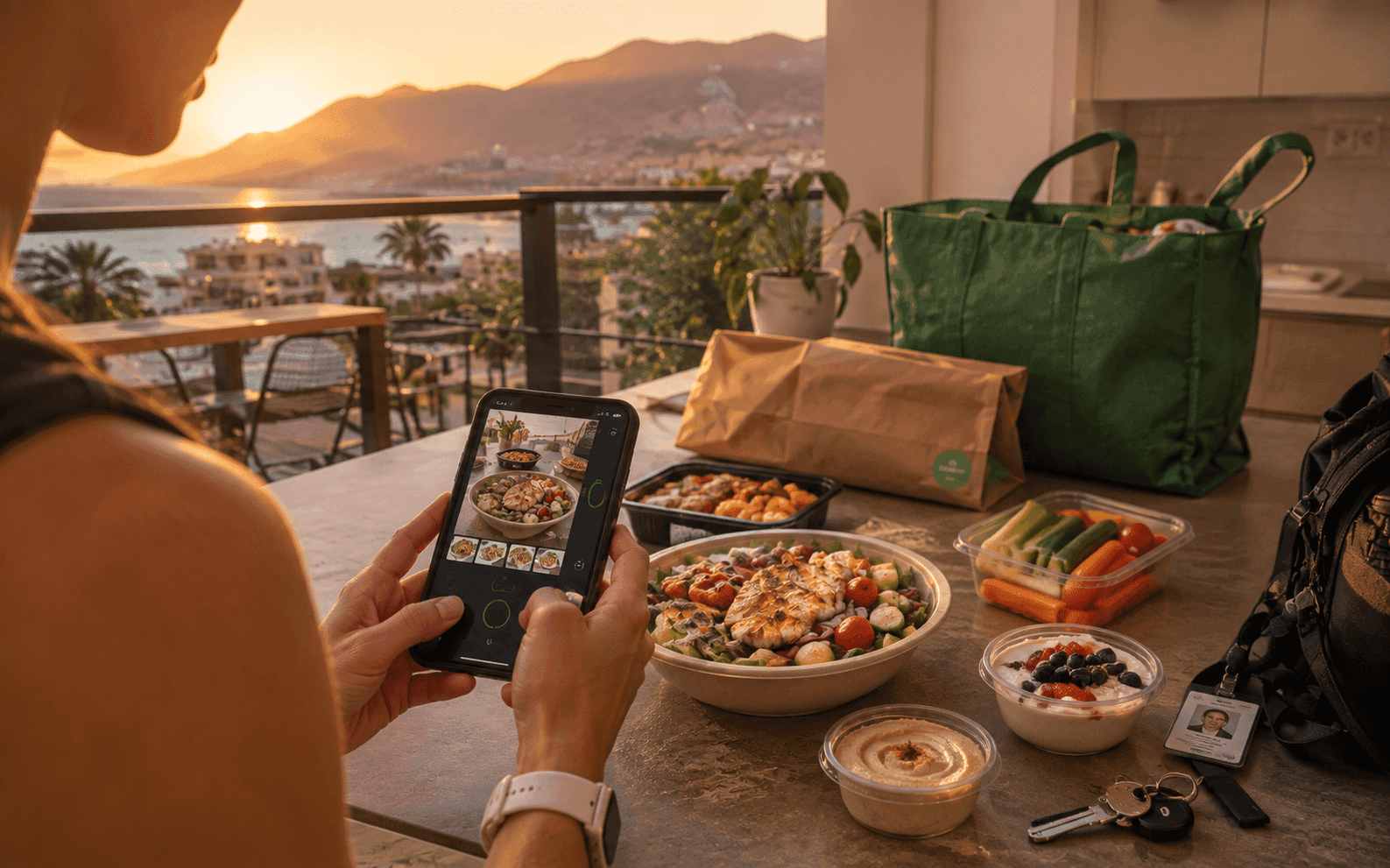
Here's what a typical day looks like using mostly delivered or minimally prepared food, without a full cooking session:
Breakfast: Greek yogurt with granola and fresh fruit, no cooking required, around 350 calories
Lunch: A delivered grilled protein salad from a regular local spot, around 500 calories
Snack: A pre-portioned hummus and vegetable cup, around 180 calories
Dinner: A quick-reheat frozen or pre-cooked protein with a microwaved vegetable side, around 450 calories
Total: Roughly 1,480 calories, with almost no active cooking beyond reheating, which matters when the kitchen is the last place you want to be after a hot shift.
Conclusion
Tracking calories in Eilat doesn't require fighting the city's heat, shift schedules, or smaller delivery scene. It means building a routine around a repeatable set of local restaurants, planning meals around actual shift times instead of a fixed dinner hour, and setting up a week's plan in advance so a hot, tired evening doesn't turn into an unplanned decision. With that structure in place, delivery becomes a sustainable part of the routine rather than something working against your goals.